
Here’s Why That Matters to All of Us
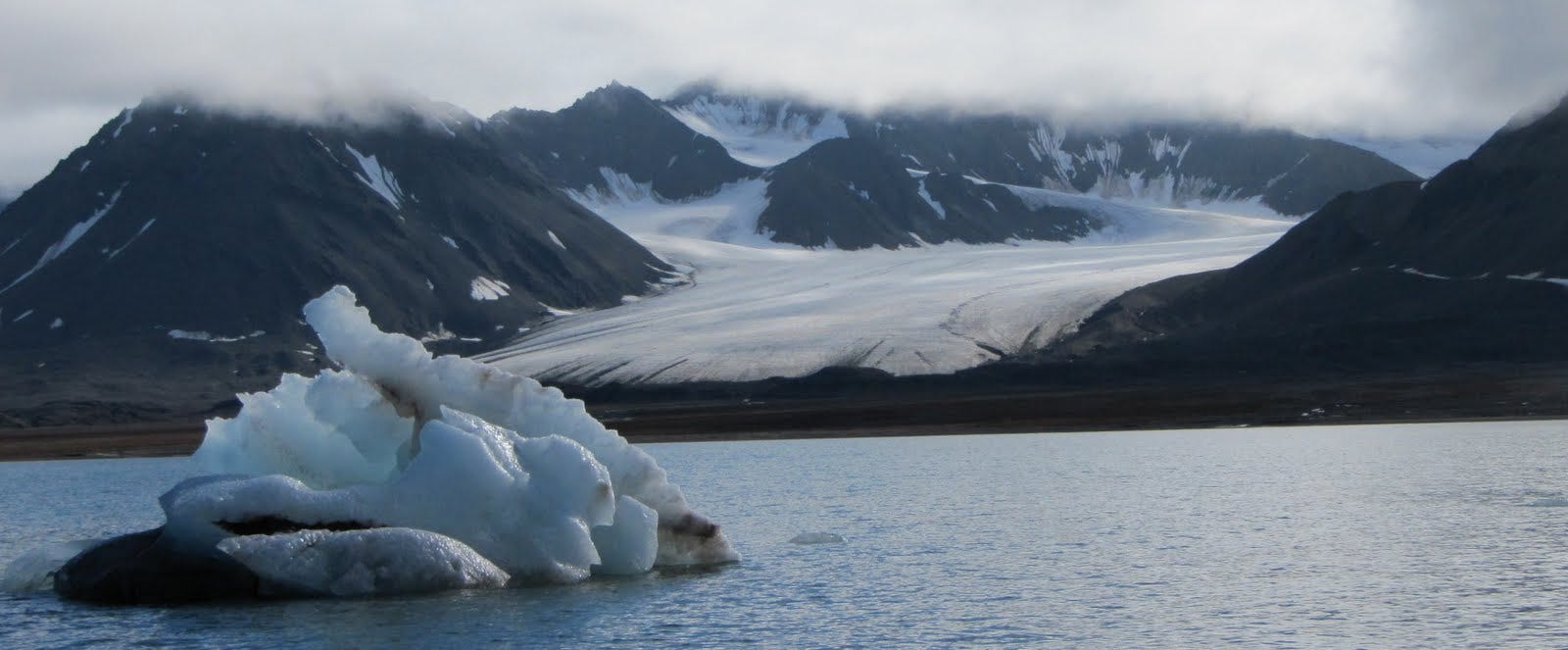
September is the Arctic’s “thinnest moment”. After months of summer sun, sea ice hits its yearly low, like a bank balance after a long holiday. That’s why scientists watch September closely. It tells us how much of the Arctic can still hold the line.
When people say “nearly ice-free”, they don’t mean the Arctic turns into a swimming pool. They usually mean less than 1 million square kilometres of sea ice left, a few scattered patches rather than a solid cap.
The core claim is simple: many researchers expect a nearly ice-free Arctic Ocean in September before 2050, and some studies suggest it could happen earlier depending on emissions and natural swings.
This isn’t just a polar story. It matters because Arctic change can nudge weather patterns, stress the monsoon, and add to global food and energy price shocks that hit households far from the ice.
/media/cc0573bab6508b17cbfdd22f3b9ef5b3Some videos cite dates like the 2030s. These usually refer to the first nearly ice-free day or a high-end scenario, not a guaranteed ice-free month.
Why scientists think a nearly ice-free September is likely before 2050
The exact year is uncertain, and anyone who promises a single date is selling certainty they don’t own. Still, the direction is no mystery. The Arctic is warming fast, sea ice is thinning, and the system now tips more easily in warm summers.
One reason this topic keeps returning is that scientists have moved beyond “monthly averages”. Some newer work looks at daily conditions and finds that a first ice-free day could arrive sooner than many people expect.
For a peer-reviewed example, see Nature Communications on the first ice-free day. See image –
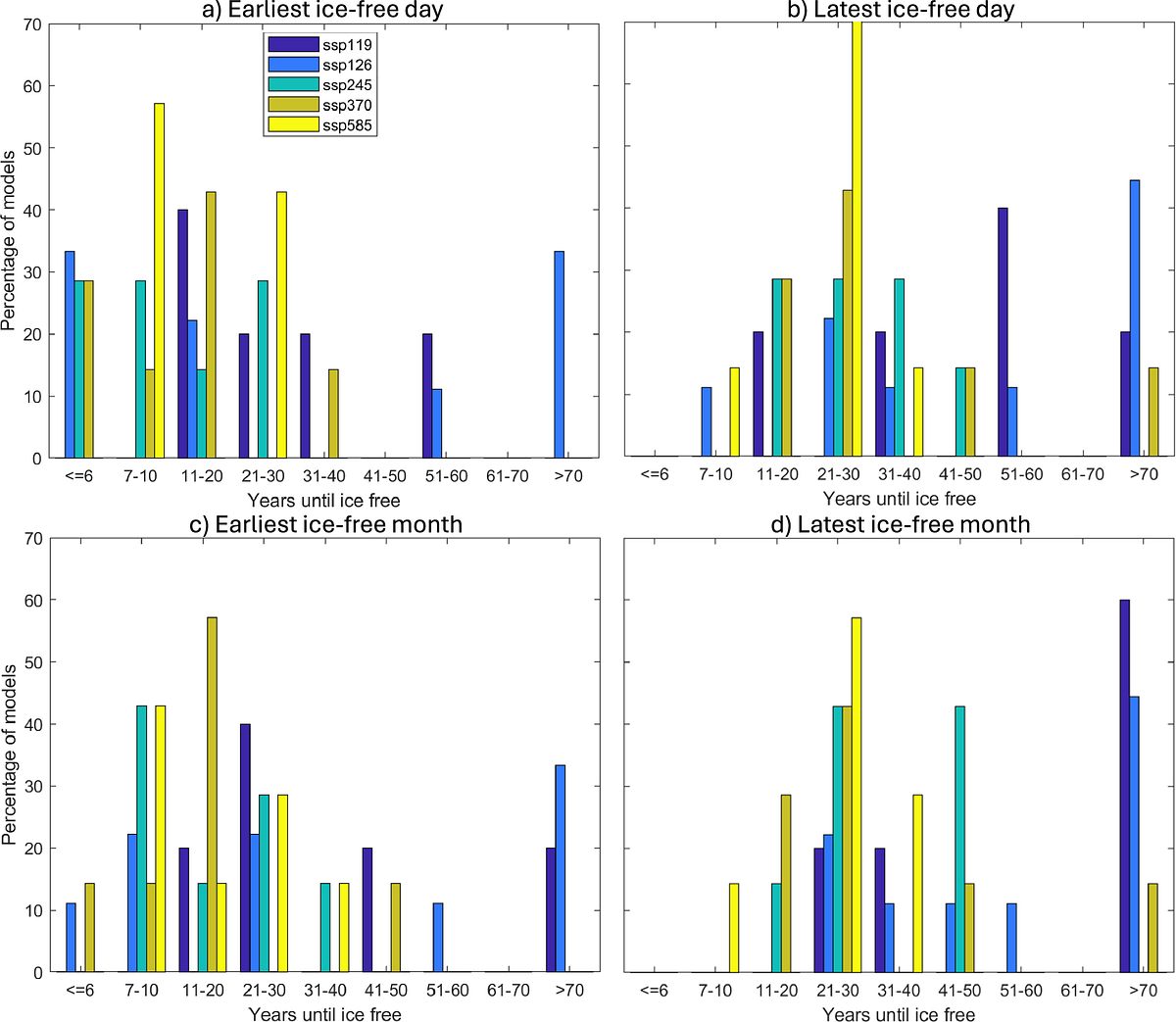
That doesn’t guarantee an ice-free month in the 2030s, but it shows how close the system can get when the ice is already weakened.
Think of September sea ice like a cracked windshield. One hot day might not shatter it, but the cracks make the next hit far more likely.
Sea ice is shrinking because the Arctic is warming much faster than the rest of the world
The Arctic heats up faster than the global average, often called Arctic amplification.
Here’s the plain-language loop: bright ice reflects sunlight, but dark ocean absorbs it. As ice retreats, more dark water shows up, so more heat gets stored, so the next melt season starts with warmer water.
It’s a feedback that punishes the Arctic for losing even a little ice.
It also helps to separate sea ice from land ice. Sea ice is frozen ocean water, floating like a lid. Land ice sits on Greenland and other Arctic land, and it behaves differently. The “nearly ice-free September” conversation is about floating sea ice, NOT ice sheets on land.
Scientists track sea ice with satellites, continuously, since the late 1970s. That long record shows a clear drop in September extent over recent decades.
You don’t need to memorise the chart to understand the point: the baseline keeps sliding down, so the threshold for “nearly ice-free” gets easier to cross.
Thinner, younger ice breaks up more easily, even in a normal summer
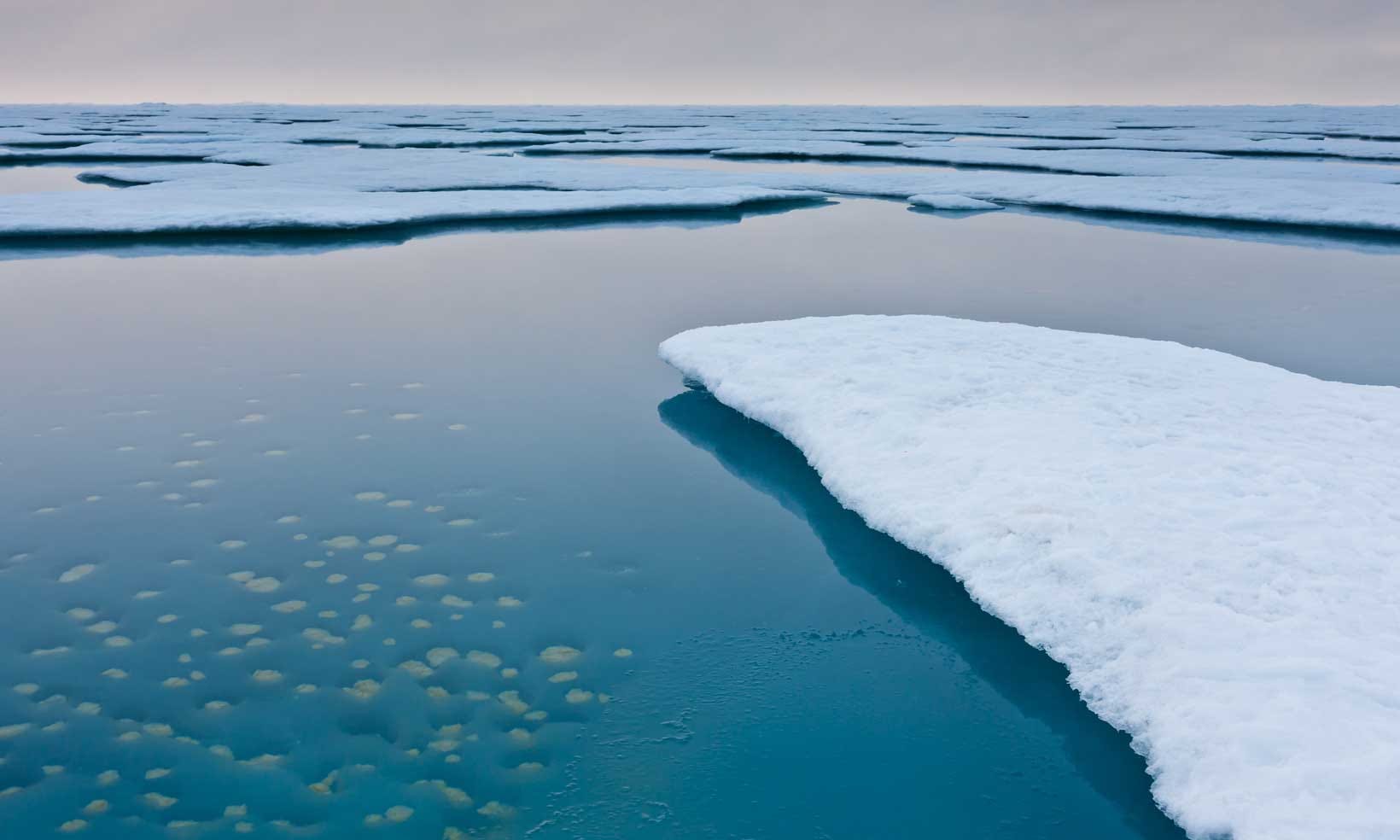
The Arctic used to have more thick, multi-year ice, ice that survived several summers. Now, much of that has been replaced by thinner first-year ice. First-year ice melts faster, cracks faster, and moves more easily when winds pick up.
It’s like the difference between an old oak door and a sheet of plywood in a storm.
Warm ocean water also plays a role. Heat can enter the Arctic from the Atlantic and Pacific, and once it’s in the upper ocean it can nibble at the ice from below. Then storms and wind patterns can push ice out through gateways, or spread it into warmer waters where it melts more quickly.
That’s why “bad ice years” often share a few ingredients: early warmth, clear skies that boost sun-driven melt, warm water near the ice edge, and winds that break up or export ice.
None of this predicts the exact year September drops below a line. It does explain why many researchers see a nearly ice-free September as a likely milestone before mid-century.
One study that narrows projections by selecting models that best match observations is this 2021 analysis on ice-free summers around 2035.
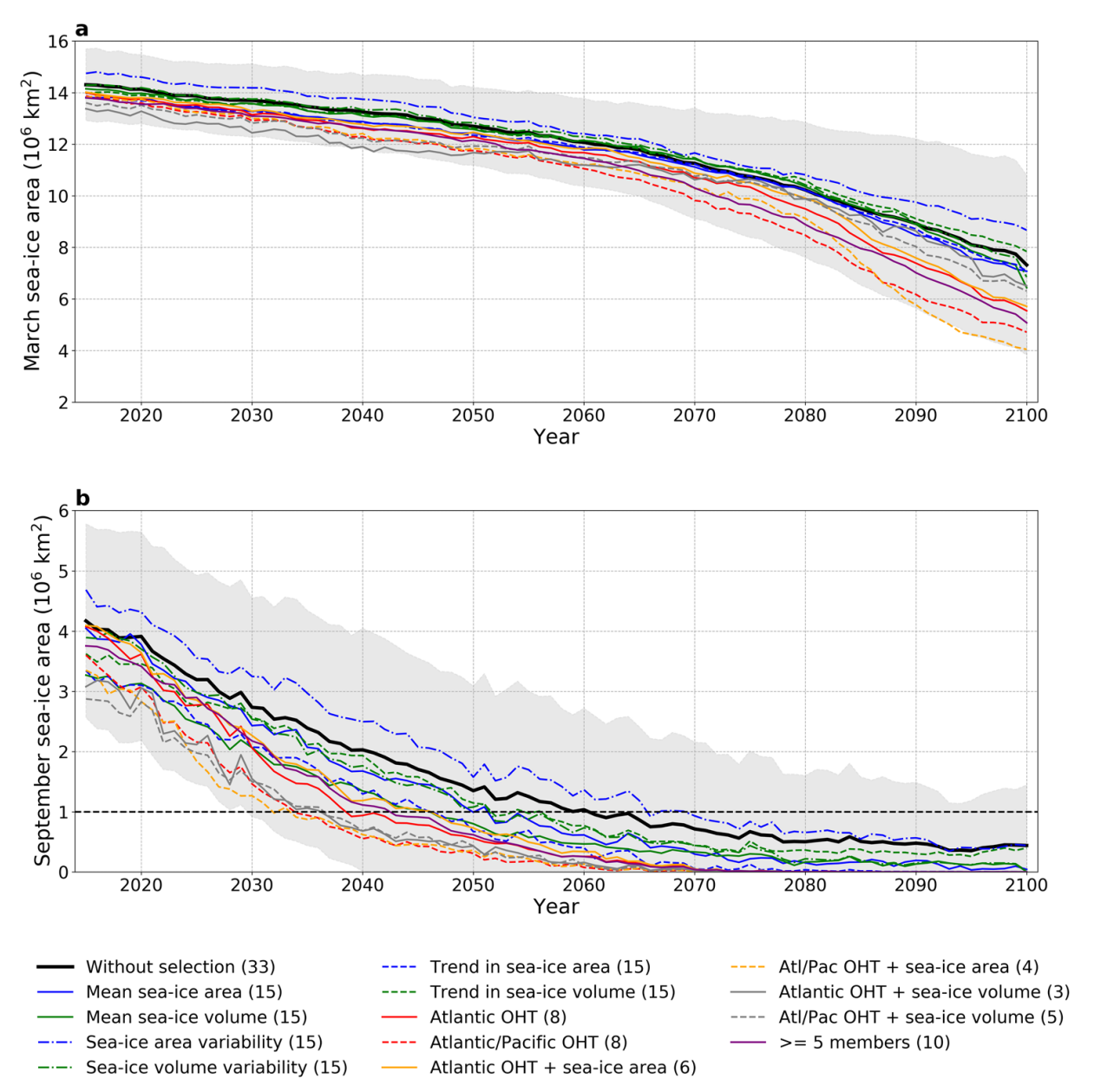
by David Docquier & Torben Koenigk
What happens when September sea ice is close to zero, and why people far away should care
A nearly ice-free September doesn’t mean the Arctic has no ice all year. Winter sea ice still forms. The harm is that summer becomes a wide-open heat sponge, and the Arctic’s rhythms change.
Some impacts stay local. Others travel outward through weather, economics, and politics.
Big local impacts: ecosystems, Indigenous communities, and new risks from shipping and drilling
Sea ice is habitat, not scenery. At the base of the Arctic food web, ice algae grows under the ice. That feeds tiny animals, which feed fish, which feed seals, which support polar bears and many other species. When the timing and location of ice changes, the whole chain gets shaken.
Less summer ice also means bigger waves. Coastal villages can face faster erosion because the ocean has more room to build energy. For Indigenous communities, that can mean damaged homes, unsafe travel routes, and disrupted hunting seasons. These are not abstract losses, they are daily life.
Meanwhile, open water invites more ships and more pressure to extract oil and gas. Supporters talk about shorter routes and new business. The trade-off is harsh: higher accident risk in a remote region, more black carbon from ship exhaust that darkens ice and snow, and the moral absurdity of burning more fossil fuels because climate change opened a path.
Wider ripple effects: weather extremes, sea level confusion, and why the Arctic matters for India
First, a common confusion: melting sea ice doesn’t directly raise sea level, because it already floats. Sea level rises when land ice melts, especially Greenland. Arctic warming can speed that up, so the sea level risk is still real, just through a different door.

Next, weather. Scientists are still working out exactly how sea ice loss shapes mid-latitude extremes year to year. The atmosphere is messy. Still, there’s evidence that Arctic warming can influence the jet stream and pressure patterns, which shape where storms stall and where heat sits.
Can we still avoid it, and what action makes the biggest difference now
Avoiding a nearly ice-free September entirely may be hard, because the system has already warmed and the ice has already thinned. However, “hard” is not “settled”. What we do next decides how often the Arctic crosses that line, how far warming goes after, and how brutal the knock-on effects become.
Timing matters because carbon dioxide stays in the air for a long time. Less CO₂ now means less long-term heat stored in the ocean. That gives sea ice a better chance to recover in cooler summers.
Methane is different. It’s powerful but shorter-lived, so cutting it can slow warming faster in the near term. Common sources include oil and gas leaks, waste, and agriculture.
A few high-impact moves show up again and again:
- Clean power that replaces coal and gas, plus stronger grids.
- Efficiency in buildings and industry, so we waste less energy.
- Electrified transport where it fits, with cleaner power behind it.
- Stopping flaring and fixing oil and gas leaks.
- Better waste systems that cut landfill methane.
Global governance matters more as Arctic waters open. Shipping standards, black carbon controls, stronger emergency response, and respect for Indigenous rights should not be optional extras. They are the price of entry for anyone operating there.
Cut personal emissions where you can, but don’t confuse that with letting big polluters off the hook.
Conclusion
September is the danger month because it reveals how fragile Arctic sea ice has become after summer. The trend line keeps falling, so a nearly ice-free Arctic Ocean in September before 2050 looks likely, and it could arrive earlier in some scenarios.
Local impacts will hit ecosystems and Arctic communities first, yet the ripples spread through sea level risks, shifting weather patterns, and global price shocks that reach India and everywhere else.
Every fraction of a degree we prevent means fewer ice-free years and more time to adapt. The Arctic isn’t a faraway postcard, it’s a warning light on the dashboard.
Ignore it, and the whole vehicle pays.

Saket Sambhav is the founder of WriteToWin, India’s premier environmental writing competition for school students. A legal professional and DBA candidate in sustainability, he launched WriteToWin to shift generational mindsets – empowering students to make conscious choices and protect the planet. He also mentors young eco-entrepreneurs, nurturing the next wave of climate leaders.