A short, brutal tour of how Earth became a production line.
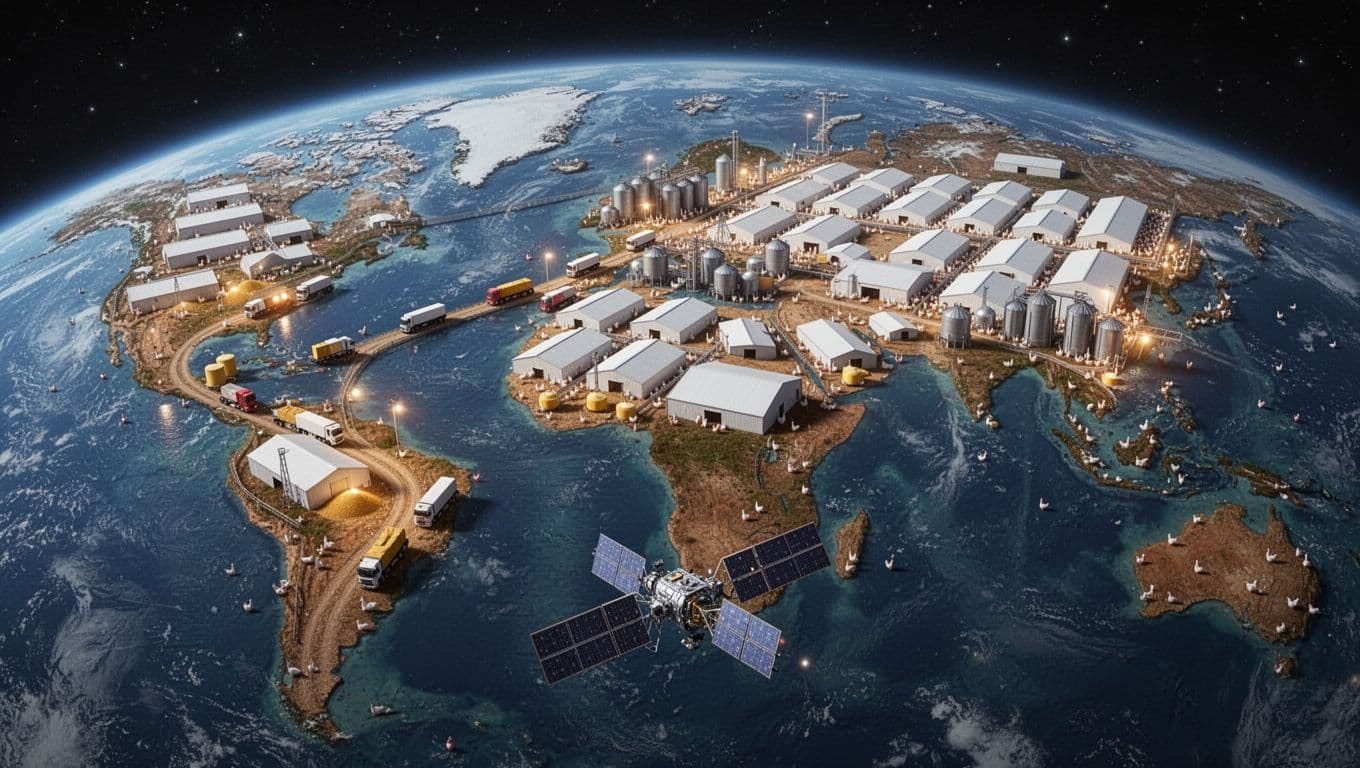
At night, the planet doesn’t just glow from cities. It glows from sheds. Long, bright rectangles spread across countryside like a second constellation, powered by fans, feed systems, and round-the-clock lighting.
Trucks move grain like blood through arteries. If you zoom out far enough, parts of Earth start to look less like a home and more like a factory floor.
That’s the uncomfortable idea behind a poultry planet. We didn’t only shrink wildlife. We replaced it, body for body, with animals bred for us.
From India, this feels close. Our diets are changing fast, our markets are modernising, and our food chains are stretching across borders. So in this piece, let’s look at the numbers, why they happened, and what we can do next.
The numbers that show we replaced wildlife with livestock
Try a simple thought experiment: if you could weigh every mammal on Earth, what would the scales say?
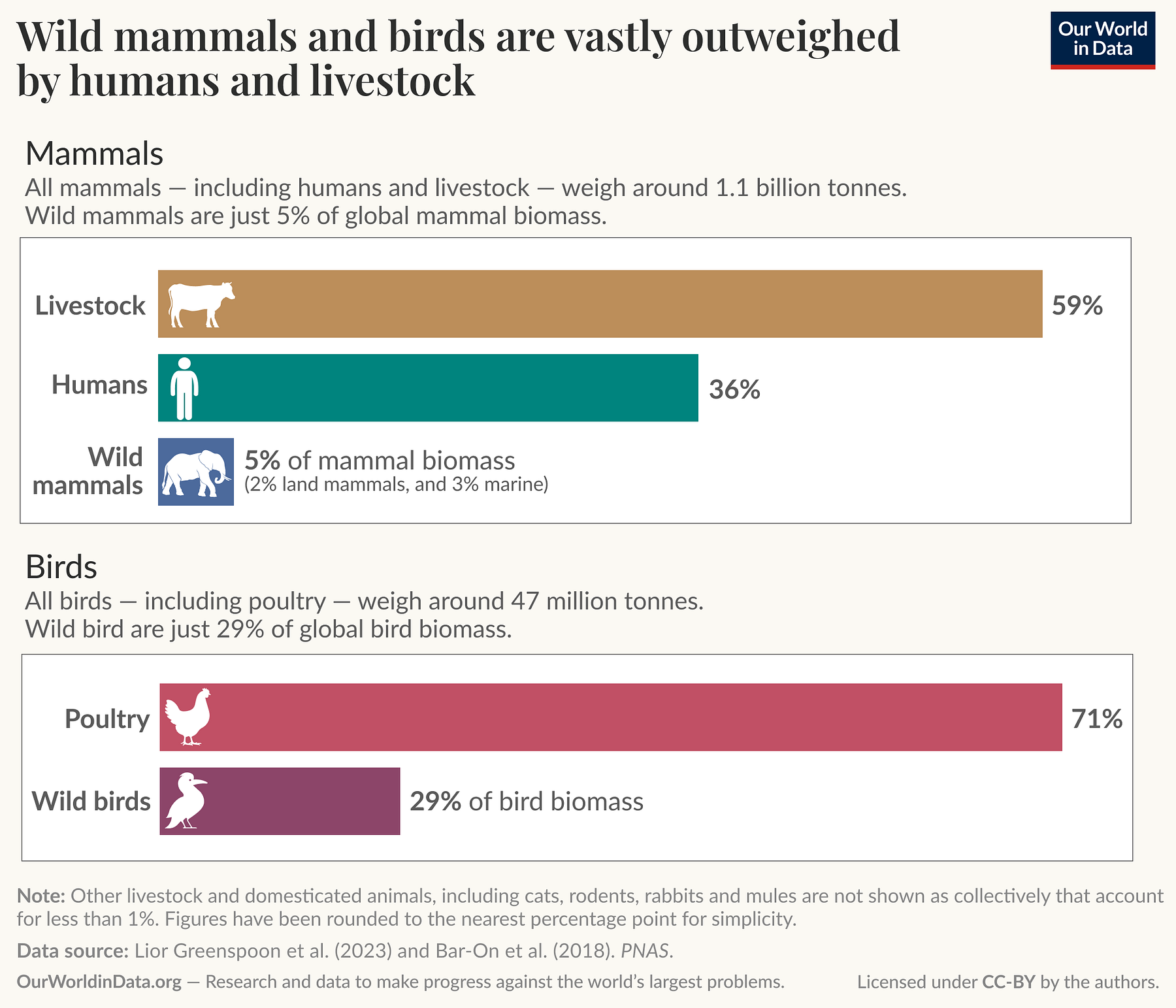
The latest widely used global estimates (still the benchmark in 2026) land on a blunt answer. Humans and our farm animals make up about 95% of mammal biomass, while wild mammals sit at around 5%.
In plain terms, almost all the mammal mass on this planet is either us, or animals we raise.
Put into comparisons that stick in your throat: livestock outweigh wild land mammals by about 30 times. Humans outweigh wild land mammals by roughly 20 to 1.
Wildness has not disappeared, but it has been PUSHED into the margins, like an old song played quietly in the next room.
Biomass can sound like a cold word. It’s just total living weight. Yet it tells the story that headcounts hide. A forest can hold many small creatures, but our food system concentrates huge amounts of flesh into a narrow set of species.
For a clear, accessible summary of these biomass shares, see Our World in Data’s breakdown of wild mammals and birds.
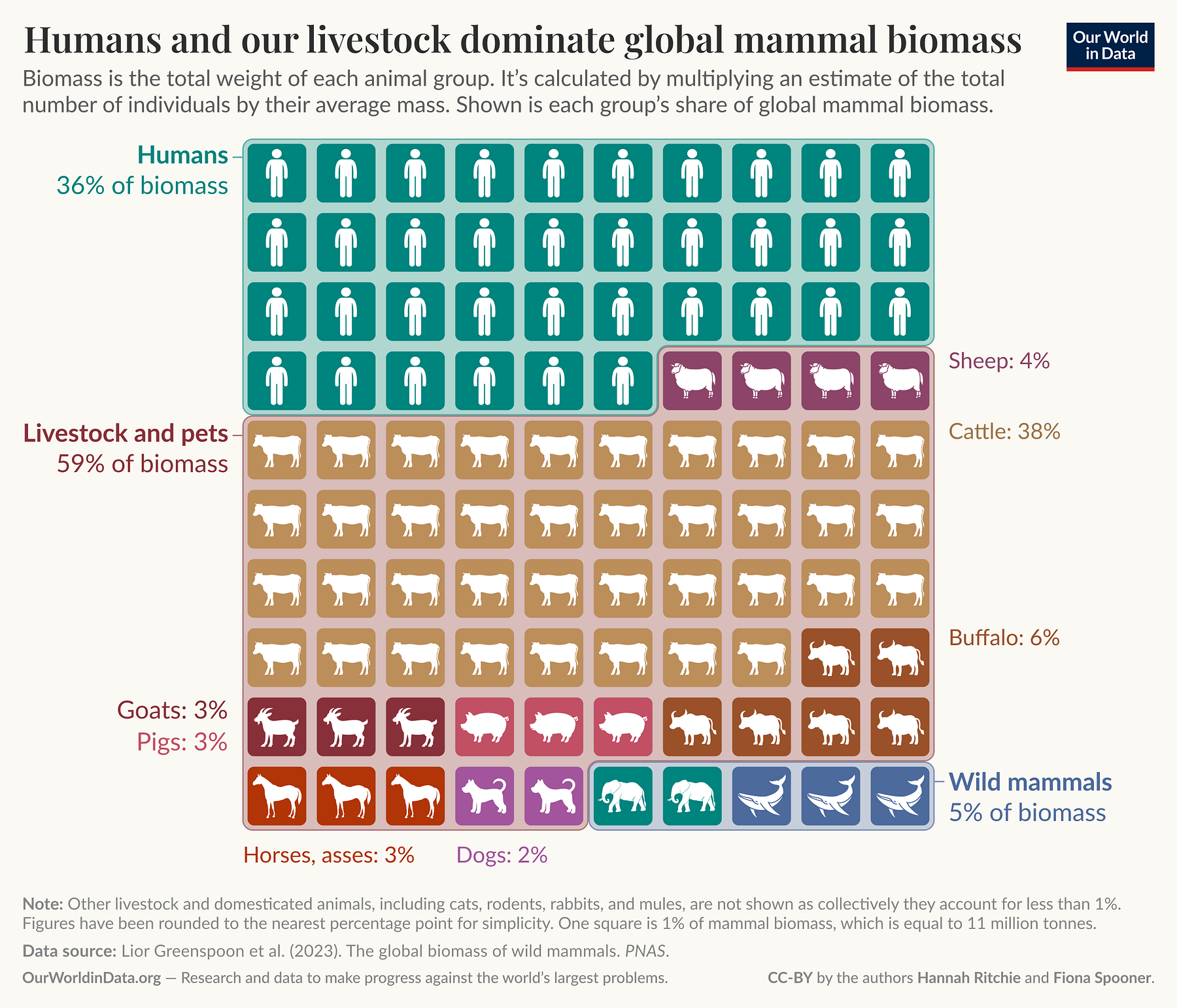
Once you see it, you can’t unsee it: we didn’t merely take space. We took the very category of “most life”.
Biomass is a mirror. It reflects what we prioritise, what we protect, and what we can’t stop producing.
Why bird biomass is the clearest ‘poultry planet’ signal
Birds make the pattern even sharper. Across popular summaries and ranges, farmed poultry outweighs wild birds, and many often-cited estimates put poultry at roughly 70% of bird biomass.
Part of the reason is speed. Chickens are bred in vast numbers, grow fast, and cycle through the system quickly. They also live close to people, so the mass piles up around cities and transport routes.
Wild bird biomass is harder to pin down than mammal biomass. Different studies use different methods and data gaps are real. Still, the headline holds: poultry comes out heavier either way.
Biomass matters because it links to land, feed, and pressure. More farmed bird mass means more grain fields, more water use, more manure, and more habitat squeezed elsewhere.
How we built a poultry planet, step by step
This didn’t happen because humans are uniquely evil. It happened because the system rewarded one thing above all: cheap, steady protein at scale.
First came demand. As incomes rose, diets shifted. That story plays out in Mumbai and Manila, Lagos and Los Angeles. Busy households wanted quick meals. Restaurants expanded. Supermarkets standardised cuts and packaging.
Delivery made meat feel as easy as tapping a screen.
Next came industrial farming, because it met that demand. Bigger sheds, bigger integrators, tighter genetics, faster growth. Supply chains then did what supply chains do. They optimised for cost, speed, and uniformity.
Then the feed machine ramped up. A chicken breast is not just a chicken. It’s maize and soy, fertiliser and diesel, ports and roads. A global poultry planet is also a global grain planet.
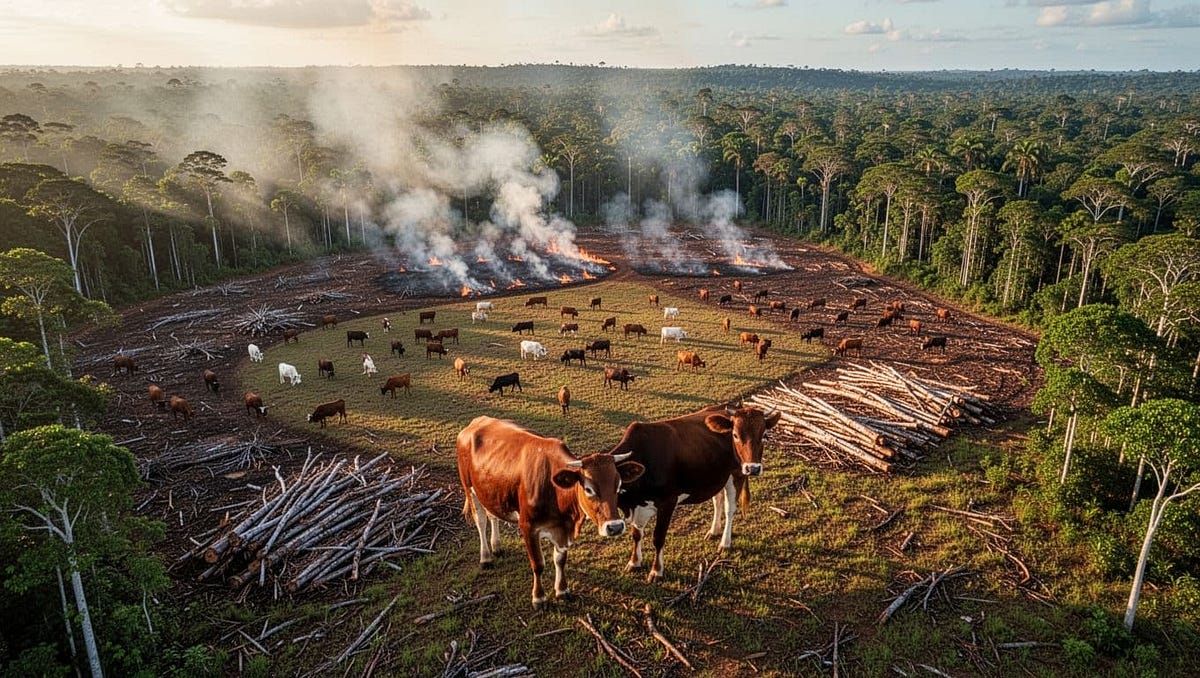
Finally, land conversion followed the money. Forests and grasslands became pasture and feed fields. The Amazon is the clearest symbol of this pressure.
Region-wide analyses repeatedly show livestock as a leading driver of vegetation loss, mapped in efforts like MapBiomas Amazonía’s land-use reporting.
Land, feed, and forests: why livestock needs so much space
Feeding animals with crops adds an extra step, and each step loses calories. We grow edible plants, feed them to animals, and then eat the animals. Some energy becomes bone, heat, movement, and waste.
That doesn’t mean everyone must stop eating meat tomorrow. It does mean the maths is heavy. When billions of people want more animal protein, the land demand rises fast.
Pasture expansion is the blunt end of the chain. Feed expansion is the quieter end. Both can drive clearing, and both chop habitats into fragments. Biodiversity struggles most when homes become islands.
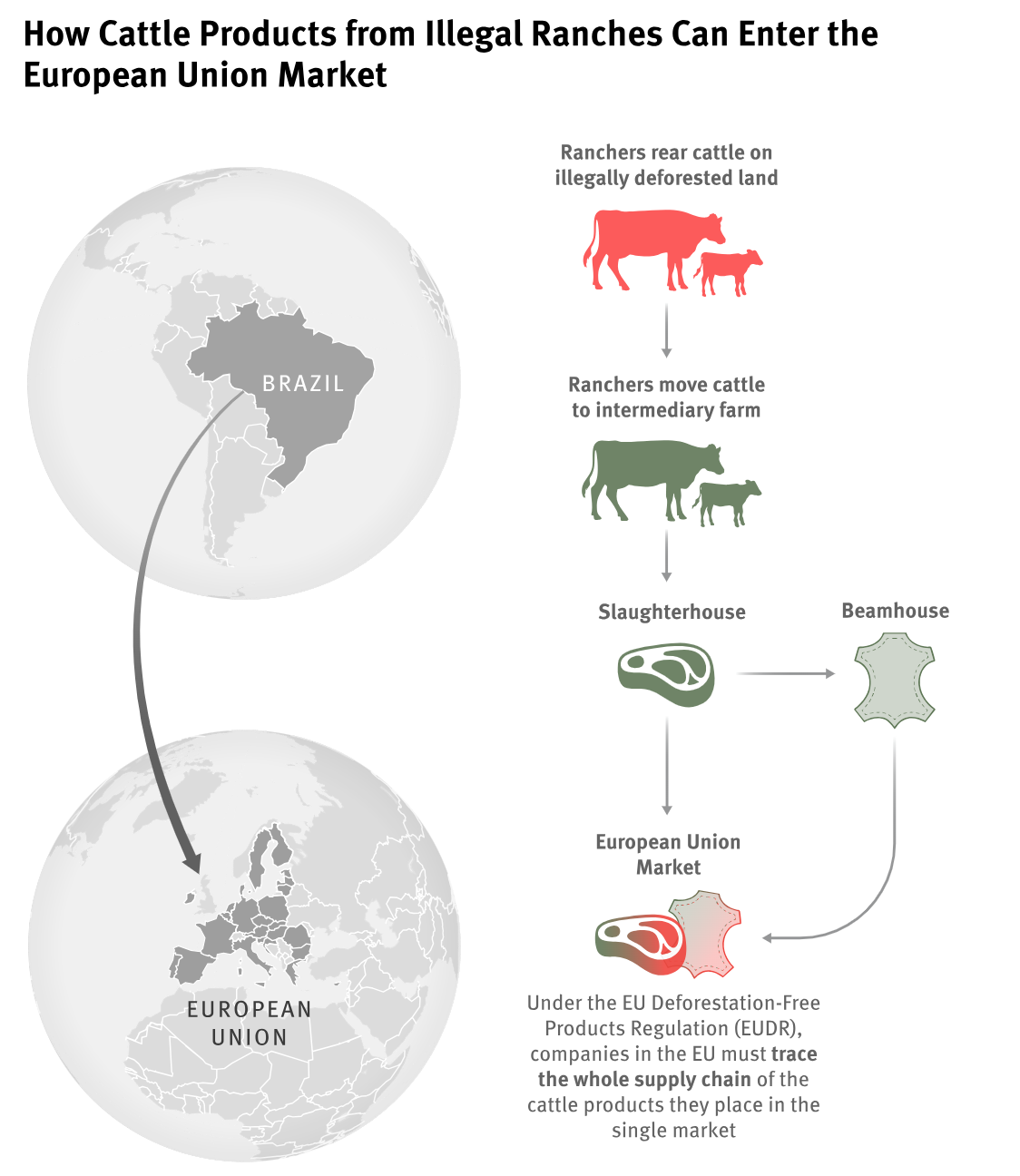
In the Amazon, the risk is not only direct clearing. It’s also weak tracking. Cattle can move between farms, which can blur where forest loss happened.
Investigations into supply chain loopholes, including “laundering” risks, show why transparency matters, as detailed in Human Rights Watch’s report on cattle supply chains and illegal deforestation.
A fragile system: disease risk, waste, and climate pressure
A poultry planet is efficient, but it’s also brittle.
Crowded flocks can speed up disease spread. That risk grows when animals, workers, and products move through long networks. This is a zoonotic risk story, but it doesn’t need panic. It needs honesty and safeguards.
Waste is another pressure. Manure is useful in the right place and amount. In concentrated systems, it can overload soil and waterways with nutrients.
Climate pressure adds a third layer. Livestock systems emit greenhouse gases, and land clearing removes carbon stores. Meanwhile, monocultures, whether in feed fields or in animal genetics, act like a house with one exit.
Diversity is a safety net.
What a better balance could look like (without pretending it is easy)
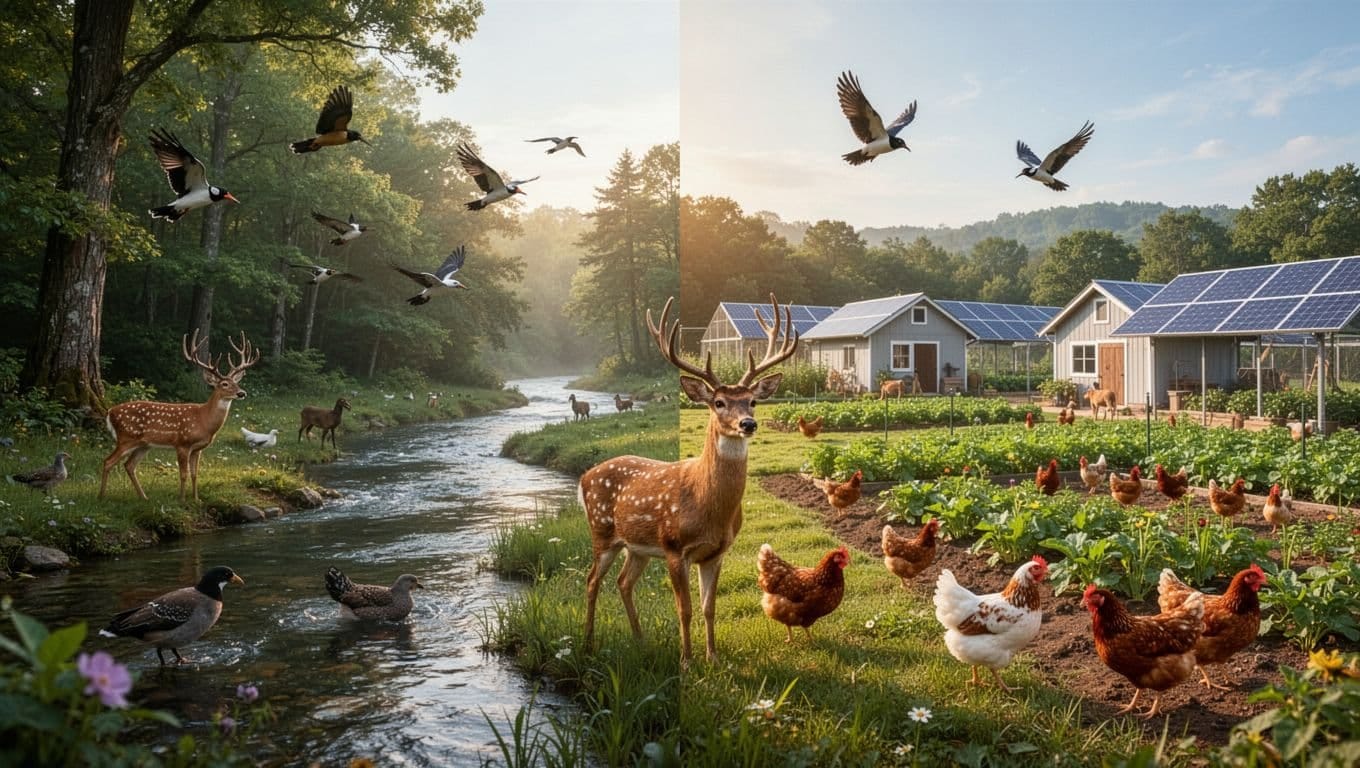
A different future won’t arrive through guilt. It will arrive through better defaults.
At the personal level, small shifts matter most when they’re normal, affordable, and repeated. At the business level, procurement standards and supply chain rules can move faster than culture.
At the policy level, governments can protect habitats and stop illegal clearing, if enforcement is real.
A useful north star is the idea behind Half-Earth: leave far more space for nature so life can breathe. It’s a simple concept, not a magic spell, and it comes with hard questions about equity and rights.
Still, the core aim is clear, explained in the Half-Earth Project’s “Why Half?” summary.
Levers that scale: diets, alternative proteins, and less waste
Shifting towards plant-rich meals can cut land pressure without demanding purity. Choosing lower-impact proteins more often can also help.
Supporting higher welfare and lower-density poultry, where feasible, reduces some systemic risks.
Trying proven alternatives, from better plant proteins to fermentation-based options, can widen the menu.
Cutting food waste is the quiet win, because wasted meat carries wasted feed, land, and emissions.
The world already holds many answers in its kitchens: pulses, millets, and regional vegetarian food that feels complete, not “missing” something.
Rules and incentives: protect habitats, clean supply chains, and price the damage
Forest protection needs enforcement that doesn’t flinch. Supply chains need traceability that closes loopholes, including the kind that enables cattle laundering. Public money should reward restoration and low-impact practices, not only volume. Farmers also need support for transitions, whether that means new crops, new markets, or better animal systems on less land.
Conclusion
Earth didn’t just lose wildlife. It got traded, kilo for kilo, for a menu we made industrial. Mammals are now dominated by humans and livestock (about 95%), and birds are increasingly dominated by poultry (often summarised around 70%).
That is what it means to say we made the world a big, very big poultry farm.
Still, this system is human-made, which means it can be re-made. We can choose food that asks for less land, demand supply chains that don’t hide forest loss, and back policies that protect living space for other species.
The real question is simple and uncomfortable: what kind of planet do we want to be citizens of, a shared home, or a production line with sunsets?

Saket Sambhav is the founder of WriteToWin, India’s premier environmental writing competition for school students. A legal professional and DBA candidate in sustainability, he launched WriteToWin to shift generational mindsets – empowering students to make conscious choices and protect the planet. He also mentors young eco-entrepreneurs, nurturing the next wave of climate leaders.