Why “beautiful” buildings can be deadly, and what to do about it
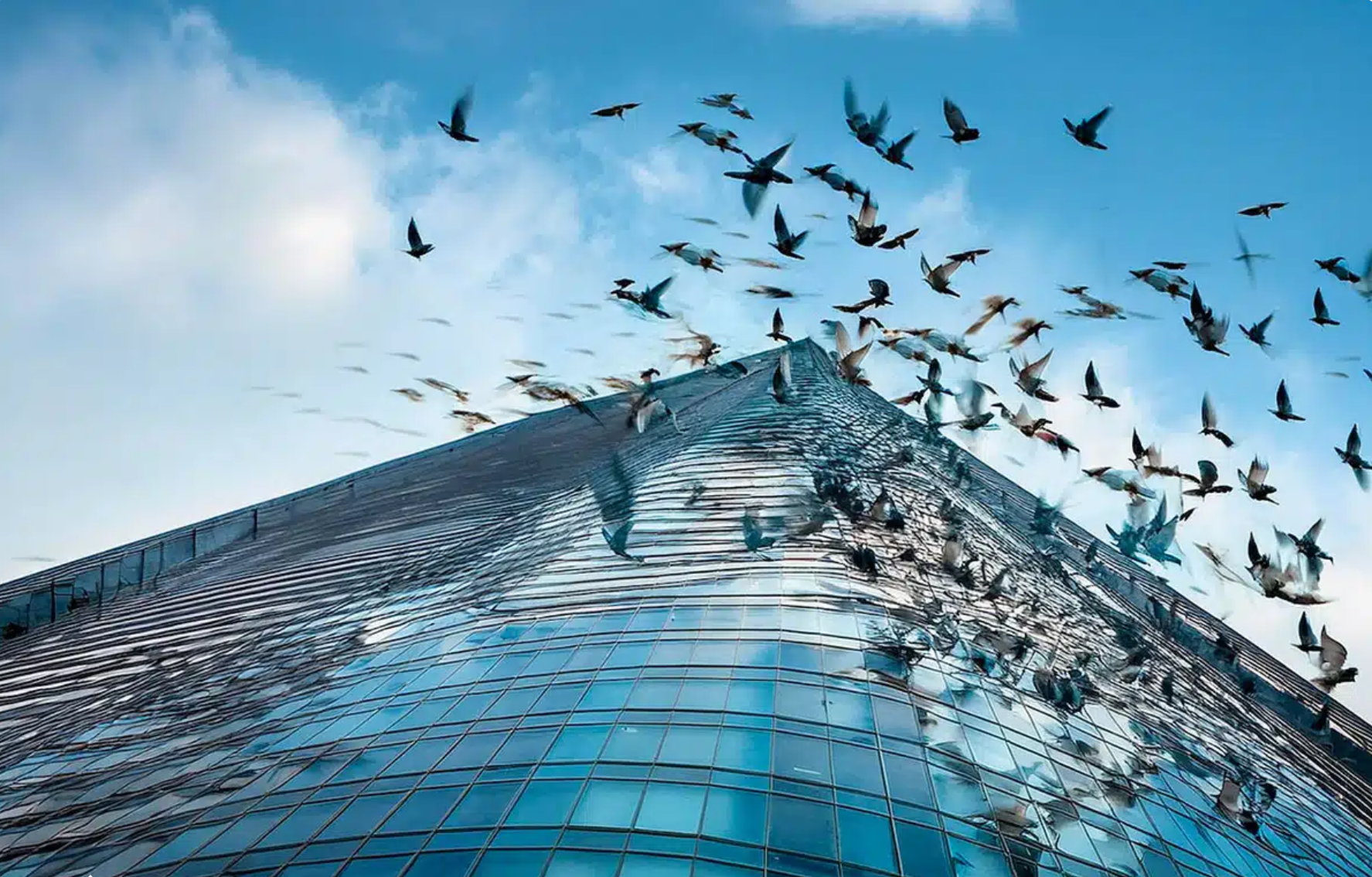
A small bird flies up from the trees at sunset, light like a leaf. It travels through the night because the air is calmer, there are fewer predators, and the stars still guide its way.
Then a city rises on the horizon. Windows glitter like water. A bright skyline hums like a magnet.
That’s the TRAP. Artificial light at night pulls migrating birds towards towns and tall buildings, and glass finishes the job. Reflections look like sky, trees, or a safe gap, so birds hit at full speed.
In the United States alone, studies now put the toll at well over 1 billion birds a year from building collisions, and the global number is almost certainly undercounted. See the summary of the 2024 findings from the American Bird Conservancy collision study.
As cities grow fast across the world, from US downtowns to Indian metros built near wetlands and flyways, this problem gets louder each migration season. The good news is simple, we can change it.
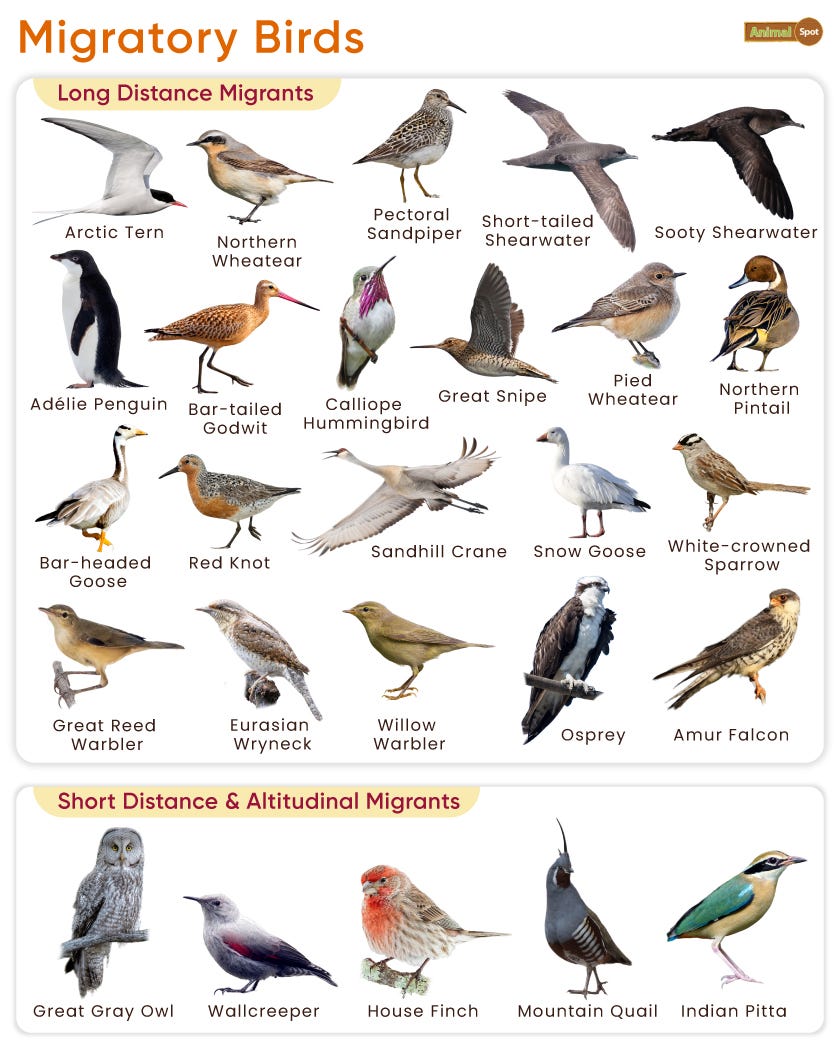
Why birds hit glass and circle lights, the simple science behind a modern crisis
Birds don’t die because they’re “stupid”. They die because our buildings lie.
Migration already runs birds on a tight budget. They travel long distances, often at night, and arrive tired. So when a glass corridor looks like an open lane, they take it.
When a bright tower punches through low clouds, they spiral around it, burning energy they can’t spare. The two hazards also feed each other, because light draws birds into city airspace, then morning reflections finish the ambush.
Spring and autumn are the danger seasons. During peak nights, a city can act like a porch light over a dark field, attracting life that never asked to be part of an experiment.
By dawn, birds drop into parks, street trees, and rooftop gardens to rest. That’s when the shiny walls are at eye level.
A glass building doesn’t need to “mean harm” to cause harm. It only needs to be invisible at the wrong moment.
Glass looks like sky, trees, or a safe gap

Glass kills in two main ways: reflection and see-through.
A mirrored façade reflects trees and clouds, so a bird aims for the “habitat” it thinks it sees. Clear glass at corners, skywalks, balcony railings, bus shelters, and glass noise barriers creates the second illusion, an apparent open route.
This is why collisions happen in daylight too, not just at night. In fact, many of the worst strike zones sit right beside greenery, where birds feed and flush quickly when startled.
The brutal part is what happens after impact.
Some birds die on the spot. Others fly away and still die later from internal bleeding, brain injury, or broken bones.
Rehab centres see this pattern again and again, and even with top care only about 40% survive after a building strike.
So the “it flew off, it’s fine” comfort is often a story we tell ourselves.
Light pollution pulls night migrants into cities and keeps them there
Many songbirds migrate at night using a mix of star patterns, the Earth’s magnetic field, and learned cues. Bright city light scrambles those signals.
Low cloud and fog make it worse because light bounces back down, creating that familiar dome of skyglow.
Tall buildings then become lures and obstacles at once. Birds circle lit towers, lose altitude, and drop into the urban maze. By morning, they’re stuck, moving between pockets of green, while glass lines the route like an invisible fence.
City data shows how sharp the peaks can be. Research estimates New York City loses about 90,000 to 230,000 birds each year to collisions. Chicago can see up to 2,000 deaths in a single day during migration.
Those numbers are not just statistics, they’re a warning about what happens when bright light and reflective glass share the same postcode.
Where the damage shows up most, and why India cannot afford to guess
From India, the crisis feels close, even when the headline numbers come from the US. Indian cities are adding glass quickly, and many sit beside lakes, marshes, and coastal edges that birds use as refuelling stops.
Yet we don’t have robust collision monitoring across most metros. Missing data doesn’t mean missing deaths, it just means we aren’t counting them.
This matters because flyways don’t respect borders. A bird that breeds far north can still die on a balcony in Bengaluru, a station frontage in Mumbai, or a business park near Gurugram’s remaining wetlands.
If we want “smart cities”, we need honest cities, including honest records of what our design choices cost.
For the bigger picture on the region, the Central Asian Flyway situation analysis (CMS PDF) lays out the scale of the route and the pressure points.
Most crashes are not on the tallest towers, they are close to the ground
Skyscrapers get the photos, but low-rise buildings do much of the damage. Research shows over half of collision deaths happen at homes and buildings under four storeys.
That includes glass railings, full-height corner windows, lobbies with indoor plants, and bright atriums that read like open space.
So this isn’t only a “big developer” problem. Apartments, schools, offices, campuses, malls, and metro stations can all be part of the risk. If your building has trees outside and large panes facing them, it’s a likely strike zone.
The fix is often cheaper than people assume, and it starts with noticing which panels are the worst.
India sits at the end of the Central Asian Flyway, and many species are already under stress
The Central Asian Flyway spans about 30 countries and is used by 600-plus species. India’s flyway plan lists 171 waterbird species. Across the route, 240-plus species are in decline, and 48 are globally threatened or near threatened.

CMS CAF Waterbird Action Plan (2006). Source-CENTRAL ASIAN FLYWAY SITUATION ANALYSIS 2023
That list isn’t abstract. Think flamingos flashing pink over salt pans, painted storks on city-edge trees, sarus cranes stepping through fields, and cormorants crowding a lake at dusk.
Add urban growth, wetland loss, and weak sanctuary management, and preventable city deaths start to look like a cruel tax on survival.
On 17 Feb 2024, the “Initiative for the Central Asian Flyway” signalled that cross-border action is possible. Cities should match that ambition, because flyways only work when every link holds.
What actually works, practical fixes for buildings, streets, and everyday people
There’s no mystery solution here. The fixes are known, and they don’t require perfect behaviour from birds. They require better behaviour from us.
Start with a simple idea, make glass visible and make night less blinding. When you do both, collision risk drops hard, fast, and measurably. This is not a choice between modern design and living nature, it’s a choice between thoughtful design and lazy design.
A good building rule of thumb also helps: the first 30 metres (about 100 feet) matters most because that’s where birds travel between trees and resting spots.
Some 2026 guidance in the US reflects this by pushing for roughly 90% bird-friendly glass below that height, often referenced as “Addendum O” in green-building conversations.
Other countries can adapt the target without copying the paperwork.
Make glass visible to birds, from quick retrofits to smarter new builds
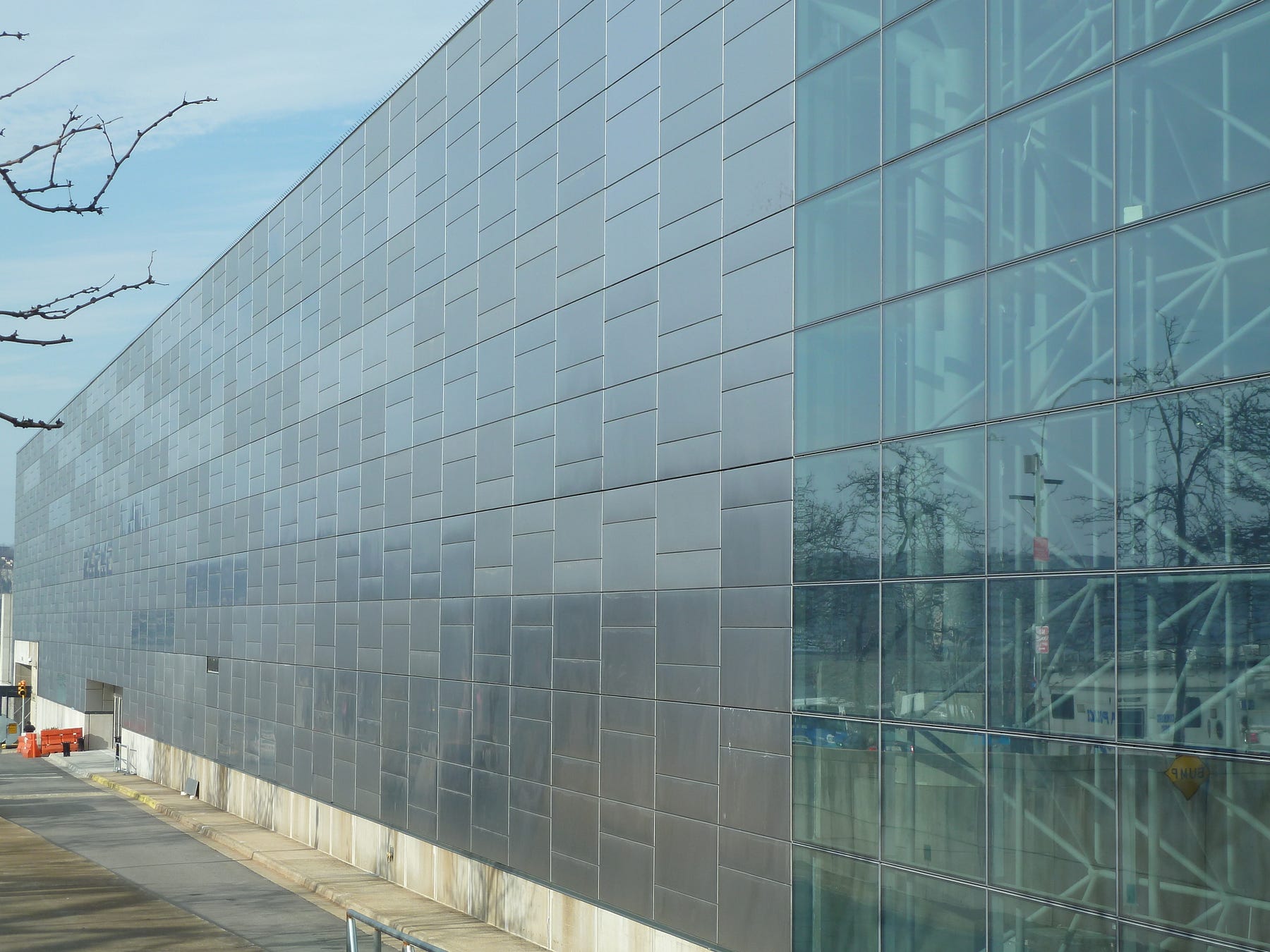
Bird-safe design works because it breaks the illusion. You can do that with:
- Bird-friendly window films and patterned markers, including UV patterns birds can see.
- Fritted glass (tiny ceramic dots baked into the pane) also works well for new builds and major refits.
- Exterior screens, shutters, or well-fitted netting can protect high-risk areas, especially on balconies and corridors.
In plain terms, birds avoid what they can recognise. Many standards describe a “threat factor”, and below 30 is considered effective, meaning the pattern spacing gives birds enough visual warning to steer away.
Light is the partner problem. So use motion sensors, timers, warmer colour temperatures, and switch off decorative lighting during peak migration weeks.
Even one building turning off unnecessary lights can reduce the pull in a neighbourhood.
Prove it can work, the retrofit success stories that cut deaths fast
Success stories matter because they cut through excuses.
The Jacob K. Javits Convention Center in New York was once infamous for kills. After renovations that changed large areas of glass, collisions dropped by over 90%.
It also cut energy use for heating and cooling by about 25% in the years reported after the upgrade. NYC Bird Alliance summarises the approach and the design options in its guide to bird-friendly building design solutions.

Other large retrofits show the same pattern. Feather Friendly treatments have reported roughly 94 to 95.6% reductions at big buildings in Canada.
In the US, venues such as Rocket Mortgage FieldHouse have also been used as examples of how fast collision numbers can fall after targeted changes. In other words, safety and good architecture can share the same wall.
To keep it practical, think in three layers. Building owners can treat the worst panes first, cities can set bird-friendly glass rules for new builds and renovations, and individuals can dim lights, draw curtains, and mark problem windows before the next migration wave.
Conclusion
The problem is simple to name, light pollution and reflective glass confuse birds and kill them at scale. The hopeful part is just as clear, collisions and light-traps aren’t fate, they’re design and behaviour choices we can change.
Start small and stay steady. Check your own windows and balcony glass, especially near plants. Then push your school, office, or housing society to retrofit the worst panes first.
Finally, ask local leaders for bird-friendly building rules and sensible night lighting during migration.
Birds cross continents on instinct and stamina. If they can do that, our cities can learn from each other too, and act before the next season turns the sky into a danger zone.

Saket Sambhav is the founder of WriteToWin, India’s premier environmental writing competition for school students. A legal professional and DBA candidate in sustainability, he launched WriteToWin to shift generational mindsets – empowering students to make conscious choices and protect the planet. He also mentors young eco-entrepreneurs, nurturing the next wave of climate leaders.