Theme: Environment And Climate Changes
“Humanity’s greatest achievement—progress—has also become its greatest responsibility.”
Introduction
The Earth’s environment operates through a delicate equilibrium developed over billions of years. However, the rapid pace of human advancement over the last two centuries has disrupted this balance, resulting in unprecedented environmental degradation and climate instability. Climate change is no longer a theoretical prediction discussed only in scientific journals; it is an observable and accelerating reality. Rising global temperatures, intensifying natural disasters, declining biodiversity, and deteriorating ecosystems collectively signal a planetary crisis that demands immediate, coordinated, and ethical action.
Scientific Foundations of Climate Change
From a scientific perspective, climate change refers to long-term alterations in Earth’s climatic patterns, primarily driven by anthropogenic activities. The extensive combustion of fossil fuels for energy, transportation, and industrial processes has significantly increased atmospheric concentrations of greenhouse gases such as carbon dioxide, methane, and nitrous oxide. These gases enhance the natural greenhouse effect by trapping heat within the Earth’s atmosphere, leading to global warming.
Empirical evidence indicates that the global average temperature has risen by over one degree Celsius since the pre-industrial era. While this increase may appear minimal, its consequences are profound. Even slight temperature shifts disrupt climatic systems, resulting in melting polar ice caps, rising sea levels, prolonged droughts, severe heatwaves, and erratic weather patterns. These changes demonstrate that Earth’s climate system is highly sensitive to human interference.
Environmental Degradation and Ecological Consequences
Climate change is inseparably linked to environmental degradation. Large-scale deforestation, excessive resource extraction, industrial pollution, and unsustainable agricultural practices weaken the planet’s natural capacity to regulate climate. Forest ecosystems function as carbon sinks, absorbing vast quantities of carbon dioxide. Their destruction not only releases stored carbon into the atmosphere but also diminishes biodiversity and disrupts hydrological cycles.
Similarly, oceans—another vital regulator of climate—are experiencing alarming changes. Increased absorption of carbon dioxide has led to ocean acidification, threatening coral reefs and marine biodiversity. The loss of such ecosystems undermines food security, livelihoods, and ecological stability, illustrating that environmental destruction ultimately endangers human survival.
Climate Change as a Global and Ethical Challenge
One of the defining characteristics of climate change is its unequal impact across regions and populations. Although industrialised nations are historically responsible for the majority of greenhouse gas emissions, developing countries often face the most severe consequences. Coastal regions confront rising sea levels, while arid areas endure water scarcity and food insecurity. Vulnerable communities, despite contributing least to the crisis, bear a disproportionate burden.
This imbalance transforms climate change into an ethical and humanitarian issue. The principle of climate justice, strongly advocated by the United Nations, emphasises fairness, responsibility, and solidarity. It asserts that global solutions must consider historical accountability while ensuring support for nations and populations with limited adaptive capacity.
Role of Science, Innovation, and Policy
Scientific research and technological innovation are indispensable in addressing climate change. Climate modelling enables accurate predictions, while renewable energy technologies provide sustainable alternatives to carbon-intensive fuels. Solar, wind, hydroelectric, and geothermal energy sources offer pathways toward reducing emissions while supporting economic development.
However, scientific solutions must be reinforced by effective governance and policy implementation. International agreements, national climate strategies, and environmental regulations are essential to ensure long-term sustainability. Without political commitment and global cooperation, technological progress alone cannot reverse environmental decline.
International Cooperation and the United Nations Framework
Climate change transcends national boundaries, making international collaboration imperative. The United Nations plays a pivotal role in facilitating dialogue, cooperation, and collective action among nations. Agreements such as the Paris Agreement represent global commitments to limit temperature rise and promote sustainable development.
Furthermore, the United Nations Sustainable Development Goals (SDGs) integrate environmental protection with social equity and economic progress. These goals recognise that environmental sustainability is inseparable from human development and global stability.
Youth Participation and Intergenerational Responsibility
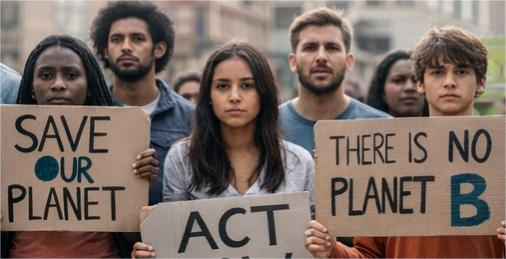
Young people occupy a critical position in the climate discourse. As future leaders and decision-makers, they will inherit both the consequences of environmental neglect and the potential benefits of sustainable action. Education equips youth with scientific understanding, critical thinking, and ethical awareness necessary to address complex global challenges.
By engaging in environmental initiatives, promoting awareness, and advocating responsible practices, young individuals contribute meaningfully to climate solutions. Their voices reinforce the urgency of intergenerational responsibility and long-term thinking.
Individual Responsibility and Collective Transformation
Although governments and institutions hold significant power, individual actions remain influential. Conscious lifestyle choices—such as reducing energy consumption, minimising waste, conserving water, and supporting sustainable products—collectively generate substantial impact. Environmental responsibility begins at the individual level and expands through communities and societies.
Sustainability should not be perceived as a limitation on development but as a framework for intelligent progress. A shift in values, prioritising long-term well-being over short-term convenience, is essential for meaningful change.
Ethical Reflection and the Path Forward
At its core, climate change challenges humanity’s ethical relationship with nature. It compels societies to reconsider definitions of progress, success, and responsibility. Ethical environmental stewardship demands that development aligns with ecological preservation rather than exploitation.
The present generation stands at a decisive moment in history. The actions taken today will determine whether future generations inherit a resilient planet or a legacy of irreversible damage. Responsibility, therefore, is not optional—it is inevitable.
Conclusion
Environment and climate change represent the most significant global challenge of the contemporary era. Scientific evidence underscores the severity of the crisis, yet it also provides pathways toward resolution. Through international cooperation, informed policymaking, technological innovation, and ethical commitment, humanity retains the capacity to restore balance.
The protection of the environment is not merely an environmental obligation but a moral imperative. Acting with foresight, equity, and determination, global society can transform this crisis into an opportunity for sustainable and inclusive progress. The future of the Earth depends on decisions made today—and the responsibility belongs to us all.