AI writing tools are everywhere in January 2026. They’re in browsers, in document apps, inside SEO platforms, even baked into email. For many people, the temptation is simple: why wrestle with a blank page when a machine can produce 1,500 words in a minute?
But the real question isn’t speed. It’s whether AI article writing assistants save time without draining trust, quality, or originality. Because the internet already has enough copy-paste advice. What we need, especially in climate and social impact work, is writing that stays honest under pressure.
This is a practical guide for students, creators, founders, and mission-led organisations (including climate, health, and justice campaigns). We’ll cover what these tools do well, where they fail, what they cost in money and reputation, and a simple way to decide if they’re worth it for your goals.
What AI article writing assistants actually do well (and what they cannot)
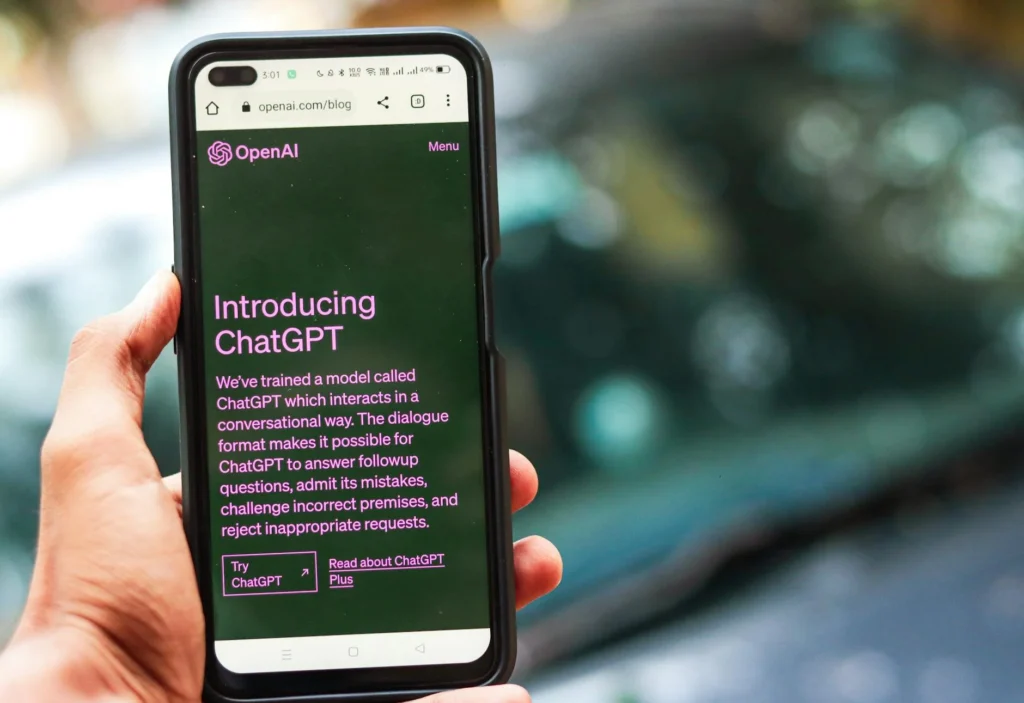
Think of an AI writing assistant as a very fast pattern machine. It predicts the next likely words based on what it has seen before. That’s why it can produce neat paragraphs, smooth transitions, and tidy lists on demand.
What it cannot do is “know” facts the way a human checks facts. It can sound calm and certain while being wrong. This matters when you’re writing about air pollution, climate policy, health outcomes, or legal rights, where a single false claim can harm real people.
AI tools can still be useful, if you treat them like a co-writer for structure and language, not a replacement for thinking.
Here’s what they’re genuinely good at:
- Idea generation: angles, hooks, counterpoints, titles.
- Outlines and structure: turning messy notes into a clear order.
- Drafting: getting from zero to “something on the page”.
- Rewriting: tightening, shortening, changing tone for a new audience.
- SEO support: suggesting headings, related terms, and meta descriptions (helpful, but not magic).
- Editing help: grammar fixes, clarity improvements, style consistency.
Results depend on your prompt, your sources, and your standards. If you feed it vague instructions, you’ll get vague writing back.
For a sense of what tools are popular right now, lists like Zapier’s guide to the best AI writing generators in 2026 can help you understand the categories (general chat tools, long-form writers, SEO writers), even if your final choice comes down to your workflow.
Fast starts: turning a blank page into an outline and first draft
The best use of AI is often the least glamorous. It’s not “write my entire article”. It’s “help me start”.
A blank page can feel like a locked door. AI can be the spare key, not the person who walks through for you.
Here are the tasks where the time savings are real:
Brainstorming angles: Ask for three opposing views, then pick one you can defend.
Structuring sections: Give it your key points and ask for a logical order.
Writing intros: Request five opening hooks, then rewrite one in your voice.
Summarising notes: Paste your research notes and ask for a clean summary (then verify it).
Making variants: One version for students, one for founders, one for a community newsletter.
If you want better output, give a better brief. A simple prompt template that often works:
- Goal: what the reader should think or do after reading
- Audience: who they are, what they already know
- Tone: direct, warm, truth-first, not salesy
- Word count: a real ceiling (and stick to it)
- Non-negotiables: facts must be sourced, no fake quotes, avoid clichés
- Key points: 6 to 10 bullets in your own words
This matters for climate writing. “Explain carbon markets” is too broad. “Explain carbon markets for Indian college students, include one local example, list risks and who benefits” gives the tool a map, not a foggy sky.
Where quality breaks: shallow content, sameness, and made-up facts
Readers can smell AI-written filler now. Not because AI is “bad”, but because it often produces safe, average sentences. The kind that could belong to any blog, anywhere, written by no one in particular.
Common problems you’ll notice:
Shallow content: It repeats what everyone already knows.
Sameness: Familiar phrasing shows up across many AI-made posts.
Over-confident errors: Wrong statistics stated like truth.
Fake authority: Invented experts, quotes, or “studies”.
Outdated claims: Old policies described as current.
No lived experience: Nothing local, nothing felt, nothing risked.
This is risky in climate, health, and policy writing. If an AI tool invents a number about heat deaths, or misstates a law, it can spread panic, or worse, spread complacency.
If you want a clear explainer on why these systems make things up, The Conversation’s overview of AI hallucinations is a grounded starting point.
And if you work in high-stakes fields, it’s worth seeing how researchers test reliability. One example is Stanford’s paper, “Hallucination-Free? Assessing the Reliability of Leading AI Legal Research Tools”. Even if you’re not a lawyer, the lesson travels well: confident output is not the same as verified output.
Are AI writing tools worth the money and the risk? A simple cost vs value check
“Worth it” depends on what you’re writing for.
If you’re writing for traffic, you might accept more risk. If you’re writing for clients, donors, students, or communities, you’re trading in trust. Trust is slow to earn and quick to lose.
Before paying for another subscription, check five factors:
- Time saved: do you actually publish faster, or just edit longer?
- Content goal: education, advocacy, sales, community, thought leadership
- Quality bar: what would embarrass you if it went viral?
- Brand trust: are you known for accuracy, nuance, and care?
- Legal or reputational risk: could mistakes harm people or partners?
A simple way to think about it:
Writing goal | AI can help most with | Where you must be strict |
SEO and discovery | outlines, drafts, headings | originality, “same-sounding” content |
Client work | first drafts, tone variants | confidentiality, accuracy, ownership |
Community education | clarity, structure, translations of complex ideas | truth, context, local examples |
Advocacy and justice | framing options, counter-arguments | ethics, voice, accountability |
If your work touches climate justice, you’re not only optimising for clicks. You’re arguing for lives, rights, and futures. That changes the calculus.
A quick calculator: time saved, editing time added, and your real hourly cost
AI tools feel cheap until you count your time. The right question is not “How much is the subscription?” It’s “What does my writing hour cost, and am I buying hours back?”
Use this quick method for one month of real publishing, not hypothetical plans:
- Track your normal time per article
Split it into research, outlining, drafting, editing, and final proof. - Track an AI-assisted article time
Include prompting, clean-up edits, and fact-checking time. - Calculate net time saved
Net time saved = (normal hours) minus (AI-assisted hours). - Attach an hourly value to your time
Use your freelance rate, salary equivalent, or what your time is worth to your organisation. - Compare savings to the total cost
Total cost includes the subscription and any extra tools (plagiarism checker, SEO platform). - Add a “stress tax”
If you’re constantly worried about hidden errors, that’s a cost too.
If you want a structured way to compare tool costs, AI Writing Tools HQ’s calculator can help you estimate subscription differences. It won’t measure your editing burden though. Only your stopwatch can do that.
A blunt truth from experience: for many writers, AI reduces drafting time but increases editing time. If you enjoy editing and you’re strict, that can still be a win. If you hate editing, the tool may become a noisy roommate you can’t evict.
Hidden risks that can cost more than the subscription
Subscription fees are visible. The bigger costs hide in your blind spots.
Near-duplicate text and plagiarism risk
Even if the tool doesn’t copy on purpose, it may echo common phrasing. That can make your work look generic, or worse, unoriginal.
Copyright uncertainty
The rules differ by place and keep changing. If you publish for clients or institutions, get clarity on who owns what, and what your tool’s terms allow.
Bias that slips in quietly
AI often repeats patterns from the internet. That can mean gender bias, caste-blind narratives, or “development” stories that ignore who pays the price. In South Asia, these aren’t abstract concerns. They shape who gets heard.
Privacy and confidentiality
Pasting client documents, unpublished research, or sensitive community stories into a tool can create exposure. Even if the vendor promises safeguards, your duty of care remains.
Reputation damage
One public correction can be healthy. A pattern of sloppy errors can become your brand. For mission-driven work, that’s a real loss. People stop sharing. Partners stop trusting. Opponents start screenshotting.
None of this means “don’t use AI”. It means treat it like a power tool. It can build a house, or remove a finger, depending on how you hold it.
How to use AI writing assistants safely, ethically, and without sounding like a bot
If you want to write with moral force, you need a human spine in the piece. AI can help with muscle, not spine.
Ethical use is not only about disclosure rules or classroom policies. It’s about whether your reader walks away better informed or subtly misled.
For academic and research-adjacent writing, formal guidance is growing. One example is the paper in Advances in Simulation, “Artificial intelligence-assisted academic writing: recommendations for ethical use”. Even if you write outside academia, the principles translate well: transparency, verification, and human accountability.
A human-first workflow: research, sources, then AI, then strong editing
This workflow keeps you in charge, whether you’re writing from India for a global audience, or explaining local issues to the world.
- Define your core claim
One sentence. If you can’t write it, you can’t defend it. - Gather trusted sources first
Reports, official data, peer-reviewed studies, credible journalism. Save the links. - Write key points in your own words
This stops the tool from choosing your arguments for you. - Use AI for structure and a rough draft
Ask it to organise your points into headings, then draft section by section. - Fact-check every number, date, and quote
If you can’t verify it, remove it. Replace with what you can prove. - Rewrite for voice and clarity
Add your judgement, your local context, and your moral line. - Final proof, then publish with confidence
Read it out loud. If it sounds like everyone, it’s not yours yet.
A practical habit: keep a “sources used” note while drafting. It makes corrections easier and protects your credibility when a reader challenges a claim.
Make it original: add lived experience, clear opinions, and specific examples
Originality isn’t fancy language. It’s particular truth.
AI tends to write like a tourist. It describes the monument but misses the smell of the street. If you want your writing to matter, bring what a machine can’t.
Lived experience: What did you see in your city during the heatwave? What changed in how people worked, travelled, argued, or fell ill?
Local detail: Names of programmes, public transport realities, the cost of basic goods, the gap between policy and practice.
Real trade-offs: Who gains, who loses, who gets ignored.
Interviews and community voices: Even one short quote from a real person changes the weight of a paragraph.
Clear opinions: Neutrality often protects power. Say what you stand for, and why.
For sustainability and justice writing, values are part of the data. If your argument is “clean air is a right”, don’t hide it behind soft language. State it, then prove the path to it.
If you want a quick overview of the wider tool market (and how crowded it’s become), resources like Email Vendor Selection’s list of AI writing tools in 2026 show how many options exist. The bigger point is not which tool wins. It’s that tools multiply faster than standards do.
Conclusion
AI article writing assistants are worth it when they save time on structure and drafting, while you still do the thinking, research, and final edit. They’re not a shortcut to truth. They’re a shortcut to text.
A simple decision rule helps: if trust and accuracy are central to your work, use AI for support, not for final facts. Keep the steering wheel in human hands, especially in climate and public interest writing, where a single error can ripple far.
Try one tool for one month, track time saved, and use a strict checklist for facts, voice, and originality. The goal isn’t to publish more words. It’s to publish words you can stand behind when the heat rises.

Saket Sambhav is the founder of WriteToWin, India’s premier environmental writing competition for school students. A legal professional and DBA candidate in sustainability, he launched WriteToWin to shift generational mindsets – empowering students to make conscious choices and protect the planet. He also mentors young eco-entrepreneurs, nurturing the next wave of climate leaders.