A certificate can be dead weight or strong proof. The difference is simple: did you earn it in a serious competition, and does it show a real skill?
For Indian students, article writing certificates can do more than decorate a file. They can show writing ability, subject knowledge, discipline, and public-minded thinking, especially when the certificate comes from a respected competition with expert judging. Earning article writing certificates, or even a professional writing certificate, represents a valuable step for professional development. That matters on a resume, in a student profile, and in applications where everyone claims to be “hard-working”.
The real value starts with what the certificate proves.
Key Takeaways
- Article writing certificates from credible national-level competitions like WriteToWin prove real skills in research, original writing, structure, and audience engagement, going beyond school marks.
- They strengthen resumes, student profiles, college applications, internships, scholarships, and LinkedIn by showing communication, initiative, and awareness of timely issues like climate and environment.
- Value comes from expert judging, clear rules, limited AI use, and categories for Classes 6-12; free entry makes them accessible for Indian students.
- Present specifically: list competition name, theme, category, result, and article topic—avoid vague phrases for maximum impact.
- Pair with your article or portfolio to convert claims into evidence, especially for journalism, content writing, or sustainability roles.
Why article writing certificates matter beyond school marks
School marks show academic performance. They do not always show whether you can form an argument, research a topic, engage in creative writing or creative nonfiction, or write for a real reader outside the classroom.
A good writing certificate fills that gap. It works like a receipt for your effort. It shows that you took an idea, built it into a full article, and met a standard someone else checked. The process also sharpens research, structure, writing and editing, so the certificate often reflects skill development, not luck.
Recent climate and environment writing shows why this matters. Strong student essays now tackle waste reduction, water saving, urban gardens, renewable energy, plastic pollution, battery disposal, air pollution, and monsoon stress. These are live issues in India, not textbook leftovers. In this content creation process, students learn to write for a specific target audience. So when you write well on them, you show awareness that colleges and internship panels notice.
For schools, this has value too. A principal or English teacher can point to external recognition, not only internal marks.
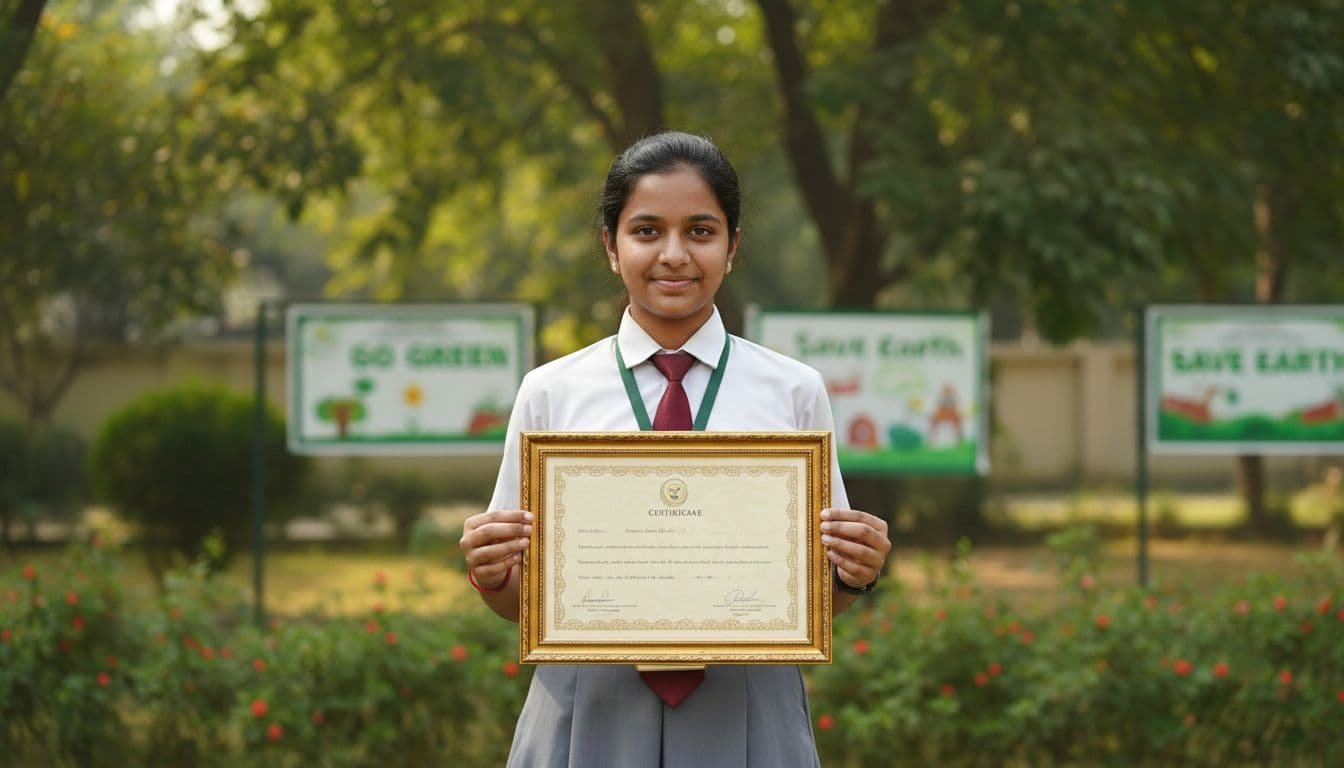
What the certificate says about you
When the competition is credible, the certificate tells a bigger story. These achievements utilise advanced storytelling techniques to engage readers:
- You can research and organise ideas.
- You can write with clarity under rules and deadlines.
- You care about issues larger than yourself.
- You can submit original work, not copied content.
That last point matters more now because some competitions allow only limited AI assistance and still demand original writing. A certificate from that kind of process carries more trust.
What makes an article writing certificate worth adding
Not every certificate deserves space on a resume. A shiny PDF means little if nobody serious assessed the work.
The better certificates come from a national-level initiative with clear rules, category-wise judging, and expert evaluation. When entries are judged anonymously by experts, the result feels fairer and stronger. It is merit-based, and that is exactly what admissions teams, scholarship reviewers, and recruiters want to see.
WriteToWin is a strong example of why context matters. It is India-based, entry is free, and the competition focuses on climate and environmental writing. Unlike standard online writing courses or asynchronous learning models, this national-level initiative offers article writing certificates that prove a student’s ability to maintain concision and clarity in original work. Students submit an English article, usually long enough to show real thinking rather than surface-level flair. The process includes clear originality rules, limited AI use, and separate junior, senior, and super-senior categories for Classes 6 to 12. Expert evaluation here serves as rigorous facilitator feedback, and that structure matters because it tells readers your certificate was not handed out for attendance. Content writing certificates from such programs carry real weight.
It also helps that the theme is timely. Climate writing now touches public health, cities, water, waste, biodiversity, and daily habits. An article on tissue waste can connect personal consumption to forest pressure. A piece on urban gardens can show how cities cool local areas and support biodiversity. Those are the kind of grounded ideas that make a student profile feel serious.
Pro-Tip: On your resume, write the competition name, level, theme, and result in one line. “National-level climate article competition, expert-judged, original 1,100-word entry, shortlisted in Senior Category” sounds far stronger than “Won writing certificate”.
If you want credible recognition with national reach, expert judging, and free participation, you can Enter Free to Win Prizes Worth Lakhs. The initiative is free to join for eligible participants, built for student and youth voices, offers prestigious certificates and major cash prizes, and is described as India’s largest youth-led climate literacy initiative.
How article writing certificates help resumes, student profiles, and applications
The biggest advantage is simple. Students usually have limited work experience. So proof of skill matters more than job titles.
For a resume, article writing certificates show communication, research, and initiative. They help build a portfolio of writing samples while validating transferable skills like writing blog posts, web content, or social media content. These credentials demonstrate commitment to persuasive writing and high-level communication. Put them under “Achievements”, “Certifications”, or “Academic Honours”. If the certificate comes from a national competition judged by experts, say that clearly. Students can also display their shareable certificate on LinkedIn to attract recruiters.

Where it helps most
A strong certificate can support several parts of your profile:
- College applications, because it adds outside proof of writing skill and subject interest.
- Internships, because NGOs, media teams, and research groups value students who write clearly.
- Scholarships, because reviewers often prefer evidence of merit, effort, and public engagement.
- LinkedIn and writing portfolios, because university students can add the shareable certificate and link the article itself.
- School profiles, because students in Classes 9 to 12 can strengthen editorial board, leadership, and council applications.
Consider a Class 11 student from Pune who writes on saving water during drought-prone months. That certificate supports school leadership roles and college essays. A Delhi undergraduate who writes on plastic pollution can use the same achievement when applying for a sustainability internship. In both cases, the certificate does one job well. It converts a claim into evidence.
How to present the certificate so it adds real value
The certificate alone is not enough. Presentation matters.
First, pair the certificate with the article title or topic. “Certificate in Article Writing” is vague. “National-level certificate for article on renewable energy myths and facts” is memorable.
Next, add detail without padding. Mention the year, category, and judging quality. If you were shortlisted, won, or received special recognition, include that. Highlight specific technical skills like grammar, proofreading, and SEO optimization if your article was published online. Note that the competition often culminates in editing and publishing stages. If you published the article or built a small portfolio, link it. Writing concise copy is a key takeaway from the competition.
Then, match the certificate to your goal. If you are applying for a journalism course, highlight writing and research. If you want an internship in climate work, highlight topic depth and public awareness. Connect it to career paths like copywriting, content marketing, business writing, or marketing strategy. For LinkedIn, keep the description short and factual.
Common mistakes to avoid
Many students weaken a strong certificate by presenting it poorly. Try to avoid these slips:
- uploading a blurry file with no context
- listing every minor certificate and burying the best one
- hiding the national-level or expert-judged part
- using vague lines such as “good communication skills”
A good profile is built on evidence, not adjectives. That is why article writing certificates can punch above their weight. They show thought, discipline, and the ability to engage with real issues, especially when the competition is national-level, merit-based, and judged by experts.
For Indian students, that kind of proof can strengthen a resume, sharpen a student profile, and make applications feel more credible from the first glance.
Register for the WriteToWin Summer Season (Entry is Free!)
Frequently Asked Questions
What makes an article writing certificate valuable?
Certificates from national-level competitions with expert judging, clear originality rules, and limited AI use carry real weight. They prove skills like research, clarity under deadlines, and issue awareness that school marks often miss. For Indian students, ones like WriteToWin on climate themes stand out as merit-based proof.
How should I present the certificate on my resume or profile?
List specifics: competition name, level, theme, category, and result, e.g., “National-level climate article competition, expert-judged, shortlisted Senior Category.” Pair it with the article title and link if published. Place under Achievements or Certifications, and share on LinkedIn for recruiters.
Are there free article writing competitions for certificates?
Yes, initiatives like WriteToWin offer free entry, national reach, expert evaluation, certificates, and cash prizes for Classes 6-12. They focus on climate writing with junior, senior, and super-senior categories. No cost barriers mean any eligible Indian student can build credentials.
In which applications do these certificates help most?
They boost college applications with writing skill proof, internships at NGOs/media via clear communication, scholarships through merit evidence, and school leadership roles. University students use them for portfolios in content marketing or journalism. Climate-themed ones highlight public engagement.
Can AI use affect certificate credibility?
Competitions like WriteToWin limit AI and demand original work, building trust in your skills. Certificates from such processes signal authentic effort over generated content. This matters as recruiters spot vague AI-assisted entries.

Saket Sambhav is the founder of WriteToWin, India’s premier environmental writing competition for school students. A legal professional and DBA candidate in sustainability, he launched WriteToWin to shift generational mindsets – empowering students to make conscious choices and protect the planet. He also mentors young eco-entrepreneurs, nurturing the next wave of climate leaders.