If you’ve ever published an article you cared about, then watched it sink without a trace, you know the feeling. It’s not just “low traffic”. It’s silence. Like you spoke into a crowded room and nobody turned their head.
That’s where SEO tools for article writing earn their keep. Not by turning you into a robot, but by showing you what people are already asking, what they expect to see, and what your draft is missing.
Still, tools can’t replace judgement. They can’t give you lived experience, local context, or moral courage. This guide lays out a simple, repeatable workflow from idea to publish using Semrush, Ahrefs, Surfer SEO, Frase, and Clearscope (plus free options). It’s written from India, for the world, with UK English spellings and examples that travel.
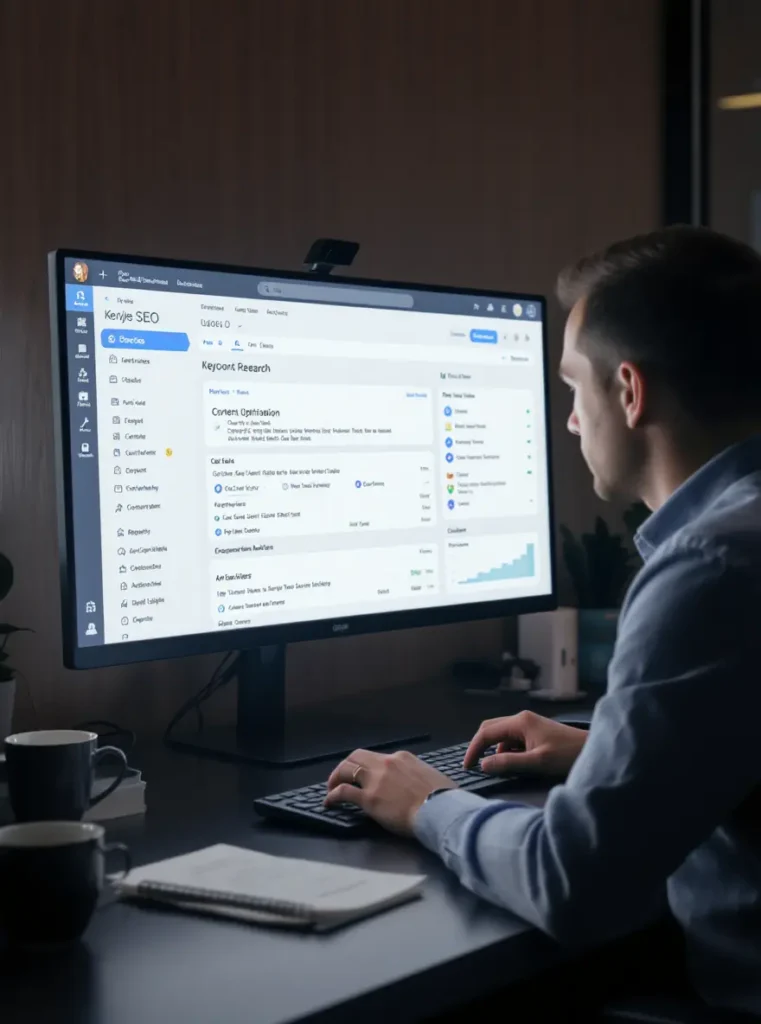
Start with the right topic and keyword, using SEO tools the smart way
SEO research is like choosing where to set up a street stall. You can pick a busy road, but if you’re selling the wrong thing, people still walk past.
Most writers make the same early mistake: chasing one big keyword because it has “high volume”. High volume often means high noise. You’re competing with brands, old giants, and pages that have been updated for years.
A better aim is simple: pick a topic where you can add something true, clear, and new.
A few quick warnings before you open any tool:
- Don’t chase one trophy keyword if you’re a smaller site or a newer author.
- Don’t stuff keywords into every sentence, it reads like bad theatre.
Don’t write what you can’t improve. If the top results already say it well, bring a better frame, fresher examples, or cleaner explanations.
Find keywords that fit your article, intent, and level of competition
Tools like Ahrefs and Semrush are strongest at the start. They help you pick a keyword that matches what you want to write and what readers want to find.
When you check a keyword, don’t just stare at search volume. Ask: what is the searcher trying to do?
- Informational intent: learn, understand, get steps (best for blog guides).
- Transactional intent: buy, sign up, download (often not your target for essays).
- Commercial investigation: compare, “best”, “vs” (works for tool roundups).
- Navigational intent: reach a specific site or page (usually not worth targeting).
If you’re new to this, keep your plan tight:
Beginner keyword set
- 1 main keyword (the core promise of the article)
- 3 to 5 supporting keywords (close variants and subtopics)
- 5 to 10 related questions (real questions people ask)
A useful reality check is Ahrefs’ own guide to keyword research, starting with their basics on Keywords Explorer.
Here’s a simple way to interpret the main metrics.
Metric | What it tells you | How to use it for article writing |
Search volume | Rough demand | Treat as a signal, not a target |
Keyword difficulty | Link competition | Avoid high difficulty if your site is small |
SERP features | Snippets, AI summaries, PAA | Format your sections to match what shows up |
Top pages | What ranks now | Study structure and gaps, not just titles |
Free options still help: Google Trends for seasonality, Google autocomplete for phrasing, and Search Console (if you already have a site) for queries you’re already appearing for.
Use competitor research to spot gaps you can write better
Competitor research sounds aggressive, but it can be ethical. You’re not copying. You’re listening to what the internet keeps repeating, then deciding what it’s missing.
In Ahrefs or Semrush, open the top ranking pages for your keyword and scan:
Patterns to notice
- Which subtopics appear in almost every article
- Which examples are repeated everywhere
- Which points feel vague, dated, or padded
- What’s too US- or UK-centred, where global readers get left out
Then build a “gap list” before you write a single paragraph:
Gap list (quick test)
- What is not answered at all?
- What is answered but unclear?
- What is technically correct but not usable?
- What ignores context, like cost, language, bandwidth, or policy?
- What can you improve with a sharper lens (public health, fairness, climate risk, local constraints)?
From India, writing for a global audience, this is where you can stand out. Not by forcing “Indian examples” into every section, but by widening the frame. Power cuts, heat stress, air pollution, water scarcity, informal work, these are not niche topics anymore. They are the future many countries are walking towards.+
Plan your outline and brief with content tools, before you start writing
An outline is not bureaucracy. It’s a promise you make to the reader: “I won’t waste your time.”
In 2025, structure also helps machines. AI summaries and answer engines don’t “feel” your prose. They extract meaning. Clean headings, clear definitions, and direct answers make your work easier to cite and harder to misquote.
Build an SEO content brief from the SERP, without copying anyone
Surfer SEO, Frase, and Clearscope can suggest headings, terms, and missing topics based on what already ranks. Used well, that’s helpful. Used badly, it produces a bland clone.
Treat these tools like a checklist, not a script.
If you want a solid reference on briefing, Clearscope lays out a practical approach in How to Create the Perfect SEO Content Brief. Surfer also shares a step-by-step method in How To Create Content Briefs in 8 Steps.
Your brief should fit on one page. Capture:
- Reader problem: what pain or confusion brings them here?
- Promise: what will they be able to do or understand after?
- Target keyword and supporting keywords
- Angle: what makes your take worth reading?
- Must-cover points: the non-negotiables from the SERP
- Proof plan: sources, data, first-hand examples, lived context
- Format notes: tables, short definitions, checklists, “how-to” steps
Ethics matter here. Tools will push you towards the average. Your job is to bring the honest edge, the part that only a person can write.
Choose headings that answer real questions and win featured snippets
Featured snippets are the “front row seat” on Google, and they often feed AI summaries too. You don’t win them with hype. You win them with clarity.
Use tools (Semrush topic ideas, Frase questions) to pull question-style queries, then turn them into headings that sound like how people speak.
A practical reference point is this guide on featured snippet optimisation, which explains how “position zero” results tend to work.
A snippet-friendly heading usually has three traits:
- It’s a plain question (no clever wordplay).
- It’s followed by a short answer early (1 to 2 sentences).
- It expands after, using tight paragraphs and clear terms.
Example:
H3: What is search intent in SEO writing?
Search intent is the reason someone searched, what they want to know or do. If your article answers a different question than the reader asked, it won’t rank for long.
That’s it. Direct, extractable, and true.
Write the draft with SEO tools, without ruining the human voice
Tools can push you towards “acceptable”. Your reader wants something better than acceptable. They want a voice that sounds like it has skin in the game.
Aim for readability that feels like a sharp conversation, not a lecture:
- Short sentences
- Common words
- Active voice
- Clean definitions before you build on them
AI writing features can help you move faster, but you own the outcomes. If a sentence is wrong, the tool won’t carry the blame. Your name will.
Optimise while you write, using live editors like Surfer or Semrush
Live content editors (Surfer, Semrush writing assistant features, Clearscope) score your draft against the top results. They’ll suggest:
- Word count ranges
- Terms and topics you may have missed
- Heading patterns
- Keyword usage
Use the score like a dashboard, not a judge.
A rule that saves good writing from bad tool advice: cover the important topics, skip the forced phrases. If a suggested keyword doesn’t fit the meaning, leave it out. A human can sense the bump. Google can too.
Place keywords where they belong, not where they can be shoved:
- Title: include the main keyword naturally
- First paragraph: confirm the topic early
- A few headings: only where relevant
- Alt text: describe the image honestly
- Body: sprinkle lightly, keep it natural
If you want wider context on how writers are using these platforms in 2025, this overview of AI SEO tools is a helpful snapshot of what’s popular right now.
Make the article trustworthy with sources, examples, and clear claims
In a world of fast content, trust is the slow currency that still buys attention.
Here’s a simple method: every time you make a “big claim”, do one of these right away:
- Add a credible source
- Add a real example
- Add a number with context (what it means, what it doesn’t)
- Define the term so a new reader doesn’t get lost
Trust is also about staying current. In December 2025, AI summaries and citation-style answers matter more than they did a few years ago. The goal is not just to rank, but to be the page that systems feel safe quoting. That means clear claims, consistent terms, and sources readers can check.
If you want a broad view of where SEO is heading this year, this UK-focused round-up on SEO trends in 2025 gives useful context for planning content that lasts.
Polish for rankings, AI answers, and long term growth after you finish the draft
Most writers hit publish and move on. That’s like building a community tap, then never checking if the water still runs.
The final pass is where you protect your work, and make it easier to find, scan, and cite.
Do a final on-page SEO and technical check before publishing
Keep this part simple. You’re looking for avoidable mistakes.
On-page essentials
- Title tag that matches intent and reads well
- Meta description that states the benefit, not a slogan
- Clean URL (short, readable)
- One H1 only, logical H2s and H3s
- Images compressed, with honest alt text
- If your platform supports it, add basic schema (Article, FAQ, HowTo)
If you use Ahrefs or Semrush site audits, check for broken links, slow pages, and indexing issues. Technical problems don’t just hurt rankings, they waste the reader’s time.
Track performance and update the article, using data not guesses
Publishing is the midpoint, not the finish.
In the first few weeks, watch:
- Impressions (are you showing up?)
- Clicks (are people choosing you?)
- Average position (are you moving?)
- Queries (what are you actually ranking for?)
Often, you’ll rank for unexpected long-tail queries. That’s not random. It’s your audience telling you what they really meant.
A simple update cadence that works for most evergreen posts:
- Small update after 2 to 4 weeks: tighten intent match, add missing subheadings, improve internal links
- Bigger refresh every 3 to 6 months: update examples, check claims, improve clarity, add new sections if the SERP has changed
When you update, don’t just add more words. Add more value. Cut fluff. Make it easier to read. Make it easier to quote.
Conclusion
SEO tools don’t write great articles. People do. Tools just reduce guesswork, so your effort lands where it can be seen.
Keep the workflow simple: research, brief, write, optimise, publish, track, update. Pick one tool (or a free trial), run one keyword through this process today, then publish one improved article this week. Your voice is the point, SEO is how it finds its way home.

Saket Sambhav is the founder of WriteToWin, India’s premier environmental writing competition for school students. A legal professional and DBA candidate in sustainability, he launched WriteToWin to shift generational mindsets – empowering students to make conscious choices and protect the planet. He also mentors young eco-entrepreneurs, nurturing the next wave of climate leaders.